

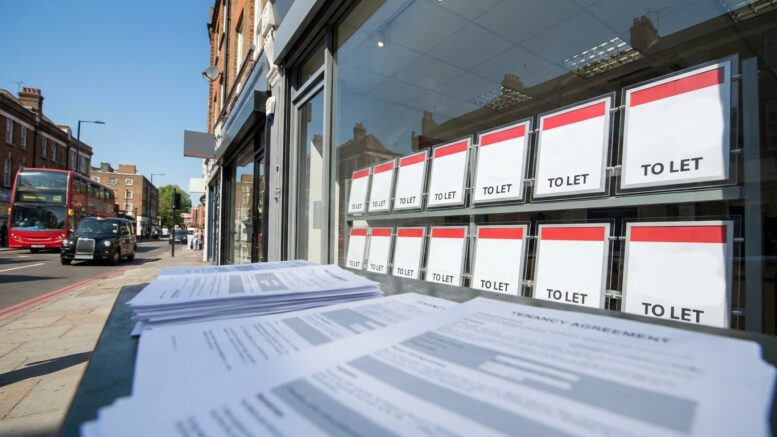
Savills forecasts UK rents will climb 15.1 percent over the five years to 2031 as a shrinking private rented sector keeps competition for homes intense. The agency expects annual growth of 2.5 percent in 2027, 2.75 percent in 2028 and 3 percent in each of the three years after, with London rents rising 15.9 percent across the period.
The forecast, published on 25 November, puts the net loss of private rented homes at 240,000 over the past four years. Savills says tenant demand should settle closer to long-term norms as net migration falls back toward 230,000 a year and first-time buyer activity stays strong – but lower interest rates later in the period will not be enough to stop landlords leaving, and build-to-rent delivery will stay below the level needed to plug the gap.
Supply, not demand, does the heavy lifting in these numbers. Mainstream rents have already risen 25.9 percent over the past five years, adding 2,640 pounds a year to the average bill, and Savills expects rents to keep outpacing household incomes until the end of 2027 before tracking earnings from 2028.
London to outpace UK average
London rents are forecast to rise 15.9 percent by 2031, running at 2.75 percent in 2027, 3 percent in 2028 and 2029, 3.25 percent in 2030 and 3 percent in 2031. Savills points to tighter supply and stronger economic growth in the capital. The average rent-to-income ratio now stands at 32 percent across the UK and 37 percent in London, down from peaks of 34 percent and 39 percent two years ago – a squeeze already visible in official data showing rents pulling away from house prices.
Emily Williams, director of research at Savills, said demand would return closer to long-term norms. “As a result, rental growth should become much more closely aligned with income growth than we have seen in recent years,” she said. But supply, she added, remains the market’s fundamental challenge. “That means tenants are likely to continue facing intense competition for available homes, keeping upward pressure on rents,” she said.
Williams flagged the main risk to the forecast: “If landlords leave the sector more quickly than anticipated, or investment in new rental housing slows further, rental growth could exceed our forecasts, and affordability pressures could re-emerge.”
Rents to outrun incomes until end of 2027
Tenant demand grew through 2026 but stayed well below the 2021-23 surge driven by high international migration, according to the research. Even so, rents are expected to rise faster than household incomes until the end of 2027. This follows Landlord Knowledge’s report on rental supply hitting a seven-year high, which found build-to-rent stock filling part of the gap left by exiting landlords. Savills’ figures suggest that replacement remains well short of what is needed. The full rental forecast is set out in Savills’ rental forecasts for 2027-2031.
What this means for landlords
- If you are weighing up a sale: projected growth of around 3 percent a year from 2029 strengthens the hold case in supply-short markets – run the numbers before joining the exit queue.
- If you are setting rents for 2027: budget for growth near 2.5 percent rather than the double-digit rises of recent years, and evidence every increase against comparable lets.
- Watch for: faster-than-expected landlord exits, which Savills says could push growth above forecast and invite fresh political pressure on the sector.
- London landlords: a 15.9 percent five-year rise keeps the capital ahead of the national path – voids and costs will decide how much of it you keep.
- Bottom line: shrinking stock underwrites steady rental growth, but only efficient, compliant portfolios will bank it.
Editor’s view
Forecasts this precise deserve scepticism, but the direction is hard to argue with: fewer homes plus steady demand equals higher rents. The question for landlords is whether rising revenue survives rising costs – and whether policymakers notice the link between taxing landlords and charging tenants.
Author: Editorial Team – UK landlord & buy-to-let news, policy, and finance
Published: 26 November 2026
Sources: Savills
Related reading: Savills: RRA costs lift prime rents again in Q2