

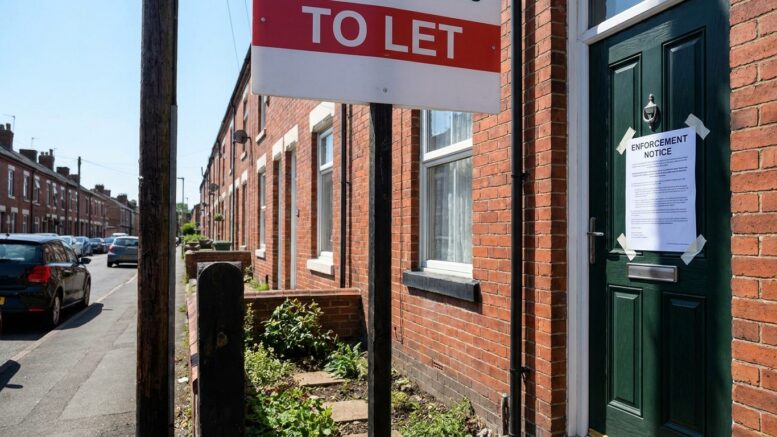
The government has confirmed landlords face fines of up to £30,000 for breaching energy efficiency rules after ministers introduced the Energy Independence Bill to Parliament on 4 November.
Propertymark’s analysis of the Bill, published on 5 November, says councils will gain stronger powers to enforce Minimum Energy Efficiency Standards across private rented homes, with better access to compliance data to help identify properties that fall short. The trade body points to a proposed maximum civil penalty of £30,000 for breaches of domestic energy efficiency regulations.
That ceiling sits far above the current £5,000 maximum for most MEES breaches, and it arrives with a fixed target attached. Ministers want privately rented homes to reach EPC C by 1 October 2030 unless a valid exemption applies, with upgraded rented homes saving households around £210 a year by 2030.
Councils gain stronger enforcement powers
Under the proposals, local authorities would get strengthened powers to enforce standards across both domestic and non-domestic private rented properties. The Bill would also improve access to compliance information, making it harder for non-compliant homes to stay off council radar.
Ministers say the tougher regime is designed to push improvements through the sector rather than simply punish owners. The government’s guidance says the £30,000 maximum is intended to encourage landlord compliance and drive improvements, cutting the number of tenants left in cold, energy inefficient homes.
Gas standing charges scrapped in same Bill
The Bill also scraps standing charges on household gas bills, ending the daily charge paid even when no gas is used. Around 23 million households are in scope, with about 60 percent of gas account holders expected to save an average of £45 a year.
Landlords who include bills in the rent should check how the change feeds into their pricing, as the saving accrues to the bill payer. Other measures in the Bill give Ofgem tougher powers over rogue energy firms and regulate energy brokers to tackle mis-selling, a move expected to save businesses around £100 million a year.
Warm Homes Agency to guide upgrades
Ministers will establish the Warm Homes Agency in law to help families access support for home improvements and lower heating costs. Existing schemes and functions would transfer to the agency or another body, giving consumers a single trusted source of advice.
This follows Landlord Knowledge’s report on surging landlord interest in Warm Homes grants, which found searches for funding climbing as the EPC deadline looms. With enforcement set to harden, early planning looks increasingly important, a point underlined by Landlord Knowledge’s exclusive FOI investigation into £5.2 million of council fines, which showed penalties are already landing on non-compliant owners.
What this means for landlords
- Check your EPCs now: any rental below C without a valid exemption is in scope for the October 2030 deadline, and enforcement will only get sharper.
- Budget for works early: lining up assessors and installers now beats joining a last-minute rush that pushes prices up.
- Log exemptions properly: if a property cannot reach C at reasonable cost, register the exemption so councils can see it in compliance data.
- Review bills-included rents: the end of gas standing charges changes bill structures, so make sure rent levels still reflect actual costs.
- Bottom line: a £30,000 maximum penalty turns EPC compliance from a slow-burn task into a board-level risk for every portfolio.
Editor’s view
Ministers have paired a bigger stick with a clearer support system, and landlords should take both seriously. The landlords who act on EPCs in 2026 and 2027 will have choice and room to negotiate; those who wait for 2030 will have neither.
Author: Editorial Team – UK landlord & buy-to-let news, policy, and finance
Published: 06 November 2026
Sources: GOV.UK, Propertymark
Related reading: FMB: Warm Homes grant interest surges as EPC deadline looms
🏠 EPC Rules for Landlords: What You Need to Know
Minimum EPC C required by 2030 – new assessment rules from late 2027