

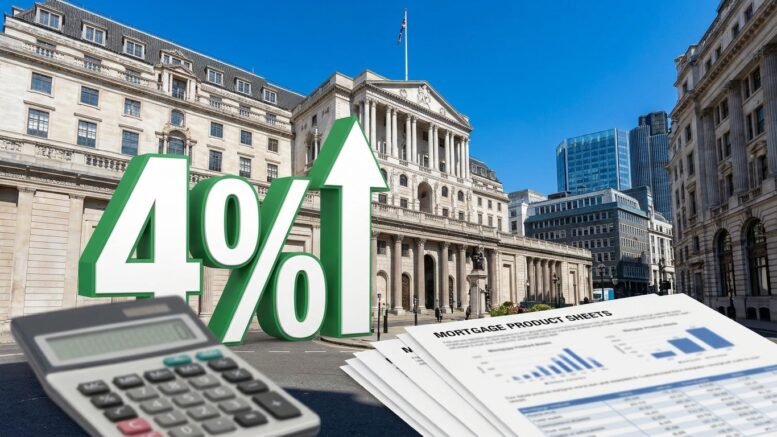
The Bank of England has lifted Bank Rate by 0.25 percentage points to 4 percent, its first rate rise in more than three years, after policymakers judged that persistent inflation needed a further check.
The Monetary Policy Committee voted by a majority of 8-1 on 4 November to raise the rate from 3.75 percent, with the decision announced at noon on 5 November. Catherine L Mann voted against the move, preferring a larger 0.5 point rise to 4.25 percent.
Borrowers on tracker and standard variable rate mortgages will feel the change first, while fixed-rate borrowers are shielded until their deals end. UK Finance data shows 8.47 million homeowner mortgages outstanding, with 87 percent on fixed rates and around 2.3 million fixed deals due to expire by the end of 2027.
Why the Bank acted now
Inflation stood at 3.5 percent in September, well above the 2 percent target, and the Bank said the rise should help limit how far higher energy costs feed into prices across the economy. Market pricing ahead of the meeting had put a near-96 percent chance on a move to 4 percent, so the decision itself held few surprises for lenders.
The Bank said it will watch wages and prices and will set rates as needed to bring inflation back to target. Its latest Bank Rate decision page confirms the 4 percent rate.
Mortgage costs climb for variable borrowers
UK Finance figures put the average tracker balance at 147,468 pounds at a 4.84 percent pay rate, with average monthly interest of 595 pounds. A 0.25 point rise adds about 30.72 pounds a month on a typical tracker and 14.28 pounds on a typical standard variable rate mortgage. Fixed-rate borrowers see no change until they refinance.
Nick Leeming, chairman of Jackson-Stops, said pricing discipline now matters more for sellers. “For those households already navigating higher living costs and stretched budgets, the increase in the base rate is another factor influencing when and whether they decide to move,” he said. “With caution in the air, our advice for sellers to price realistically from the outset to ensure a swift and successful sale is increasingly important.”
Leeming added that stamp duty reform could help unlock activity. “Targeted stamp duty reform would be a positive step to help ease some of that pressure, giving households greater confidence to make their next move and helping lift activity across the property market,” he said.
Fixed-rate borrowers face later impact
Lenders price fixed deals off expected future rates, so much of this move was already baked into current offers. The pressure point comes at refinancing, where borrowers rolling off sub-4 percent deals face a step up in pay rates and tighter affordability tests.
Rachel Geddes, strategic lender relationship director at Mortgage Advice Bureau, said variable borrowers move first. “Anyone on a tracker or standard variable rate is likely to see their payments impacted first,” she said. “If you are on a fixed rate, nothing changes until your deal ends, but today’s rise could still shape the deals you are offered next.”
Geddes advised early preparation. “If your deal ends in the next six months, today’s decision is a good opportunity to start comparing your options,” she said. “If you are moving home, it is worth testing your budget against a rate a little higher than the one you first planned for, in case rates change again before you move in.”
This follows Landlord Knowledge’s report on market pricing ahead of the decision, which found traders put a 96 percent chance on a rise to 4 percent on Thursday. The confirmed vote shows the committee went further than some had feared, with one member backing a half-point move, which keeps pressure on swap rates that drive fixed pricing.
Strain elsewhere in the rental market adds to the timing risk. Reposit data showing 18 percent of tenancies in arrears in the third quarter points to tenants with little room to absorb rent rises landlords might need to cover higher debt costs.
What this means for landlords
- If you are on a tracker or variable buy-to-let deal: expect your lender to pass on most or all of the 0.25 point rise within weeks, so recheck monthly cash flow now.
- If your fixed deal ends before mid-2027: start comparing buy-to-let mortgage options at least six months early and stress test at a rate above current offers.
- Watch for: repricing rounds from major buy-to-let lenders in the next fortnight and any shift in five-year fixed rates that were already near 6 percent.
- Bottom line: costs rise now for variable borrowers and later for fixed borrowers, so lock in advice early rather than waiting for the next decision.
Editor’s view
The rise was priced in, but that does not make it painless. Landlords on variable deals take the hit straight away, and the rest face it at refinancing. With arrears already at a three-year high, passing costs to tenants has clear limits. Plan refinance dates now.
Author: Editorial Team – UK landlord & buy-to-let news, policy, and finance
Published: 05 November 2026
Sources: Bank of England, UK Finance, Jackson-Stops, Mortgage Advice Bureau
Related reading: Markets price 96% chance of 4% Bank rate rise Thursday