

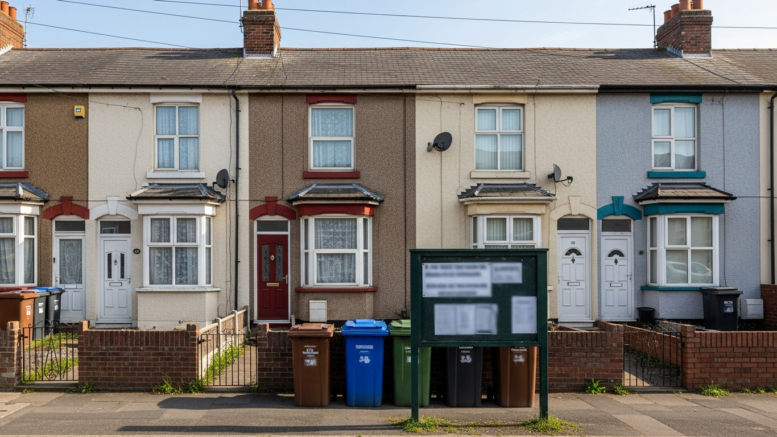
Norwich City Council’s latest private rented sector review says the evidence could support city-wide licensing for smaller HMOs and selective licensing in four wards, putting more landlords in the city on notice for a possible consultation.
The newly published committee report stops short of proposing a scheme, but it sets out a detailed case for further action. It says Norwich has 20,330 privately rented homes – 29.3 percent of all residential stock – and estimates that 2,286 of those properties contain at least one serious hazard.
For landlords, this matters now because the council is no longer talking in broad terms. It has moved to ward-level evidence on hazards, complaints, HMO concentrations and anti-social behaviour, which is usually the stage that comes before a formal licensing consultation.
Norwich review sets out case for smaller HMO and PRS licensing
A report to Norwich’s scrutiny committee on private rented sector housing in Norwich says there are 1,137 predicted smaller HMOs outside mandatory licensing and around 470 HMOs likely to contain at least one serious hazard. The document also says anti-social behaviour linked to known and predicted HMOs runs at 9.7 incidents per 100 properties, against 3.3 per 100 across the wider private rented stock.
The wards singled out for potential selective licensing are Nelson, Mile Cross, Town Close and Sewell. The council says discretionary licensing is only one possible response and any scheme would still need consultation, but the report is unusually explicit about the evidence base that could be used to justify it.
Landlord Knowledge has already tracked how councils are broadening licensing and planning controls, including Preston’s proposed £1,050 licensing fee and St Helens’ borough-wide HMO Article 4 consultation. This follows Landlord Knowledge’s coverage of councils moving earlier and harder on HMO concentration and property standards, and Norwich now looks closer to joining that group.
Landlords should prepare before consultation starts
The important point is not that Norwich has approved a new scheme today – it has not. The stronger point is that the groundwork is now public. Once a council has published hazard estimates, complaint volumes, HMO counts and area targeting, the argument tends to move from whether licensing is needed to how wide and expensive it should be.
That gives landlords a narrow window. Smaller HMO operators should check whether their properties would fall into an additional licensing design, while single-let landlords in the named wards should assume selective licensing could move from theory to consultation. The report says any formal consultation would last at least 10 weeks and any scheme would normally run for up to five years.
The broader warning is that councils are getting better at building evidence before they act. That makes blanket opposition harder. Landlords who want to influence the shape of a scheme will usually do better by engaging early on scope, standards and fees than by waiting for the final decision.
What this means for landlords
- If you own smaller HMOs in Norwich: check whether your properties could be drawn into an additional licensing scheme.
- If you let single-family homes in Nelson, Mile Cross, Town Close or Sewell: watch for a selective licensing consultation and prepare evidence on standards and management.
- Watch for: proposed licence fees, consultation dates and any draft conditions for smaller HMOs.
- Bottom line: Norwich has not launched a scheme yet, but it has published the kind of evidence that often leads to one.
Editor’s view
Licensing stories matter most when councils move past slogans and start building a case. Norwich has now done the hard evidence work, which usually means landlords should stop treating this as a distant risk.
Author: Editorial Team – UK landlord & buy-to-let news, policy, and finance
Published: 11 August 2026
Sources: Norwich City Council
Related reading: Preston proposes £1,050 landlord licensing fee