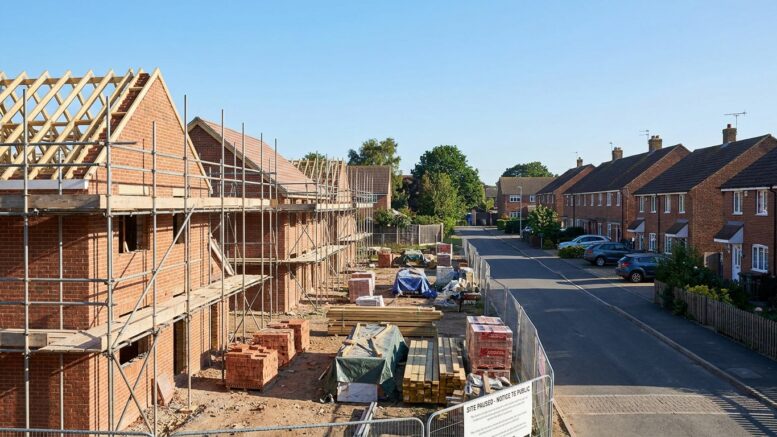
The government is on course to deliver around one million new homes in England by July 2029, about 500,000 fewer than its 1.5 million target, according to the UK Housing Review Autumn Briefing Paper published on 15 October by the Chartered Institute of Housing and the University of Glasgow.
The new estimate marks a worsening outlook since the full UK Housing Review in March, when researchers predicted a shortfall of around 25 percent. The briefing puts the likely gap at about one-third and points to pressure on both social landlords and private developers.
A shortfall on that scale leaves the private rented sector carrying demand that new supply was meant to ease. With advertised rents already at record levels this autumn, a slower build rate points to longer void-free periods for well-priced stock but also to continued scrutiny of rents, conditions and delivery before the Autumn Budget.
Housing supply pressures limit new rental stock
Social landlords were previously expected to deliver around 70,000 affordable homes a year, but the briefing says heavy spending on existing homes is cutting capacity to build. It cites energy efficiency work, heat network upgrades and work to meet the Decent Homes Standard.
Private developers face a different squeeze from construction costs and weak development viability. The briefing notes a trend of private firms pulling back from housebuilding, particularly in London, with FTSE 250 group Kier Group stepping back from the activity last month to reduce exposure to economic volatility. Cost pressure of that kind feeds into asking prices for new homes and into the rents needed to make fresh investment stack up.
Gavin Smart, chief executive of the Chartered Institute of Housing, said current delivery was not matching the scale of the challenge. “If we are to build the homes the country needs, councils, housing associations and developers must have the certainty and investment necessary to increase supply,” he said. “Social and affordable housing will be critical to achieving that goal.”
Private developers face viability squeeze
The briefing says interest rates, inflation and tight public spending continue to weigh on output. It also examines 15 wider housing topics, including public spending limits, English devolution and the role of rent controls in tackling affordability.
Mark Stephens, editor of the UK Housing Review, said the briefing was launched in difficult economic conditions on the eve of the Autumn Budget. “These circumstances contribute to making the government’s housebuilding target even more difficult to achieve,” he said.
This follows Landlord Knowledge’s report on planning approvals falling to a 14-year low, which showed the early pipeline weakening before site starts. The latest 500,000-home gap suggests that weakness is now feeding into the 2029 target arithmetic rather than clearing. Landlords tracking Rightmove data on new-build supply hitting a nine-year low will see a consistent picture of limited new competition for existing rental stock.
The briefing stops short of setting rents policy, but its inclusion of rent controls as a topic bears watching. Tight supply has historically supported rents while also increasing calls for intervention, a pattern landlords saw during previous supply squeezes. The full detail is set out in the Chartered Institute of Housing briefing on the 1.5 million homes target.
What this means for landlords
- If you hold stock in high-demand areas: a 500,000-home shortfall to July 2029 points to sustained tenant demand and limited new-build competition for existing lets.
- If you plan to buy or build: test deals against slow new supply, firm construction costs and local planning risk rather than assuming approvals will recover quickly.
- Watch for: the Autumn Budget for grant funding and planning measures, plus any move from discussion of rent controls to firm proposals.
- Bottom line: fewer new homes than planned supports occupancy but keeps regulatory and affordability pressure on the sector.
Editor’s view
Missing the target by a third is not just a Whitehall miss. It confirms landlords will remain the main source of housing for years. That position brings pricing power, but also a duty to keep standards high before ministers reach for tougher rules.
Author: Editorial Team – UK landlord & buy-to-let news, policy, and finance
Published: 16 October 2026
Sources: Chartered Institute of Housing, University of Glasgow, UK Housing Review
Related reading: HBF: planning approvals fall to 14-year low