

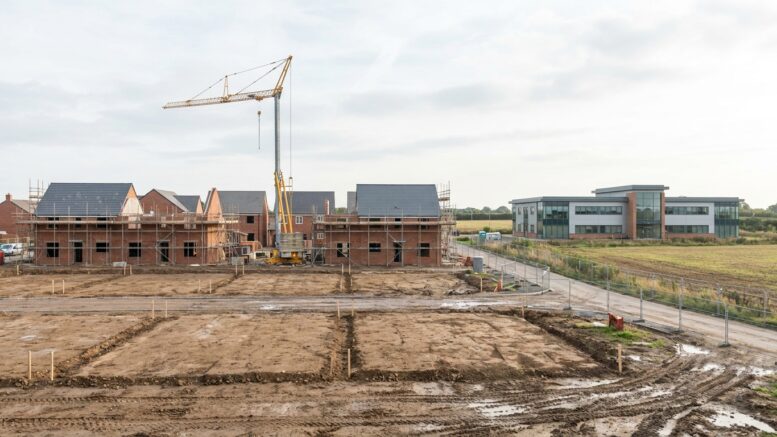
The Home Builders Federation says just 45,315 new homes received planning permission in England in the second quarter of 2026, a 21 percent fall on the previous quarter and the lowest quarterly total since 2012.
HBF’s new Housing Pipeline report, based on Glenigan data, puts permissions over the 12 months to June at 214,515 homes. That was down 8 percent on a year earlier and 36 percent below the 2017 peak. The figures are industry analysis, not an official housing-completions release, and they measure permissions rather than homes built.
Landlords watching local supply should treat the numbers as an early warning about future competition, not a reason to assume rents will immediately rise. A planning permission can take years to translate into completed homes, and the effect will differ sharply by location, tenure and property type.
Planning approvals fall below housing-supply benchmark
HBF says the annual total is 58 percent of the 370,000 permissions a year identified in the National Planning Policy Framework as the level needed to support the Government’s target of 300,000 net additional homes annually.
The drop was pronounced on larger sites. Permissions for homes on developments of more than 10 units fell 21 percent from the first quarter to 39,689 in April to June, and were 14 percent lower than in the same period in 2025. HBF also recorded 1,234 projects of three or more homes approved in the quarter, the lowest quarterly figure in its series.
Neil Jefferson, chief executive of the Home Builders Federation, said the numbers showed a housing pipeline being squeezed to historically low levels, pointing to higher costs, policy requirements and weak effective demand. HBF has also argued that a new equity-loan scheme for first-time buyers could help support demand, although the scheme’s detail has not yet been confirmed.
What the figures do – and do not – show
Planning approvals are an upstream measure. They show the potential pipeline, not the number of homes available to tenants or purchasers today. A lower approvals total may restrain supply further ahead, but it does not tell a landlord that a specific town will have fewer rentals next year.
The figures nevertheless sit alongside other signs of a weak delivery pipeline. Landlord Knowledge recently reported that Glenigan recorded a 36 percent fall in residential starts, while separate official data showed private new housebuilding fell 4.9 percent in July. Together, the measures point to pressure at both the permission and construction stages, while still describing different points in the development process.
This follows Landlord Knowledge’s September coverage of the fall in residential starts. The HBF data adds an earlier stage of the story: fewer sites are now receiving approval, which may limit the pool of projects that could replace weak starts later on.
Supply signals matter most in local markets
For buy-to-let investors, the immediate use of the report is due diligence. A scheme planned near an existing rental property can change the tenant offer, local amenities and exit market even if national permissions are falling. Equally, an area with little future development may face persistent pressure on available homes, but only where jobs, affordability and tenant demand support it.
The HBF release and Housing Pipeline report also show why national figures need care. Very small sites made up around half of projects approved over the year, while the sharpest decline was in larger developments. The mix of permissions matters as much as the headline total when judging the likely effect on a local rental market.
What this means for landlords
- If you are buying near a major development: check the local planning pipeline and delivery timetable rather than relying on national approval figures.
- Watch for: the Government’s full first-time-buyer scheme details and whether developers respond by bringing more sites forward.
- Compare like with like: permissions, starts and completions measure different stages, so do not use one to predict near-term rents.
- Bottom line: the HBF figures point to a weaker future new-home pipeline, but local demand and actual delivery will determine the effect on a landlord’s property.
Editor’s view
The permission total is not a rent forecast. It is, however, a warning that the next wave of housing supply looks thin before a brick is laid. Landlords should read it as another reason to understand their local pipeline, not as a licence to price ahead of the market.
Author: Editorial Team – UK landlord & buy-to-let news, policy, and finance
Published: 30 September 2026
Sources: Home Builders Federation, Glenigan
Related reading: Glenigan: residential starts plunge 36% as costs bite