

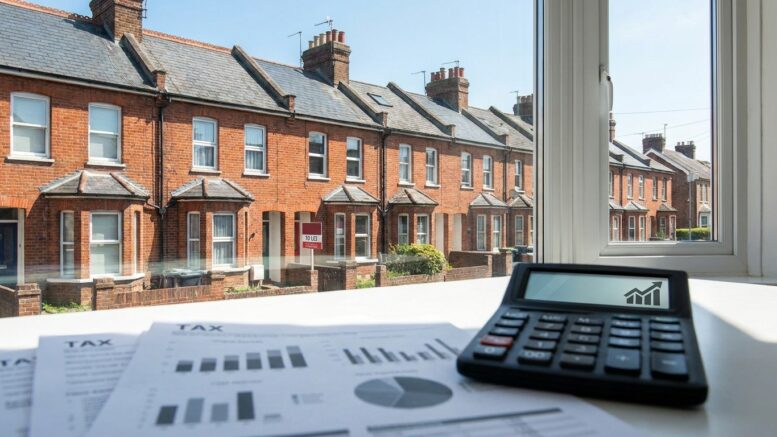
Rathbones calculations show landlords in the South East face paying £22,109 more tax over the next 25 years after the Budget lifted property income tax by four percentage points from April 2027.
Rathbones published fresh regional calculations on 11 November showing the South East carries the highest bill of any English region outside London. Landlords in the South West face £19,234 extra over the same period, while those in the East of England face £19,956, based on average rents rising by 2 percent a year.
Retired landlords who keep one or two homes to top up pensions sit directly in the firing line, because the rise lands on top of higher mortgage costs and more than 150 lettings rules. Government research cited by Rathbones found 31 percent of private landlords in England are small scale retired landlords.
South East hit hardest outside London
Chancellor John Healey confirmed rates on rental income will rise from 20 percent to 24 percent for basic rate taxpayers, from 40 percent to 44 percent for higher rate taxpayers and from 45 percent to 49 percent for additional rate taxpayers. The change follows increases announced across the past two Budgets and takes effect in April next year.
Rathbones said the South East faces the largest illustrative increase because average rents start higher, so four extra points compounds into a bigger cash sum over time. The South West and East of England sit lower in cash terms but still face close to £20,000 extra across a typical 25 year hold.
The figures build on the wealth manager’s New Retirement Reality work, which found one in 10 current retirees already receive rental income and 39 percent expect property to help fund retirement. Among those planning to use property, 42 percent expect to draw rental income rather than sell and spend capital.
Small landlords carry retirement risk
Faye Church, head of Rathbones’ Guildford office, said the pressure had moved beyond wealthy investors. “The landlord squeeze is tightening from all directions and Southern England is particularly exposed,” she said.
“With more than 150 pieces of lettings legislation estimated to navigate alongside rising tax and costs, being a landlord has become increasingly demanding. We’re hearing from clients considering cutting their portfolios or selling up altogether,” she said.
Church warned a landlord squeeze could soon feed through to tenants. “If landlords sell up or feed higher costs through into rents, aspiring homeowners across the South could find themselves paying more each month while having even less left over to save for a deposit,” she said.
This follows Landlord Knowledge’s report on Rathbones’ £36,000 retiree tax warning, which set out the national 25 year impact for London landlords. The latest regional split shows southern markets outside the capital now carry the next heaviest load.
Rents, sales and advice in focus
Landlords who rely on rent to bridge the gap between pension income and spending face a straight choice between lifting rents, cutting costs or selling. Those who sell after long holds may also face capital gains bills, while those who stay must weigh higher tax against slower price growth in the South.
Rathbones linked the tax rise to its wider warning that Budget tax changes leave some mortgaged landlords paying more than their profit, a pattern the IMLA put at 124 percent of profit for a typical higher rate case. You can read the firm’s southern investment assessment in its research on property returns in the South and East.
What this means for landlords
- If you let in the South East: model the four point rise on your actual rent from April 2027, not just the headline rate, and test it against a 2 percent annual rent path.
- If you are retired with one or two lets: check how the extra tax interacts with pension income bands, as a small rent rise can tip you into a higher band.
- If you plan to hold for 10 years or more: compare the £19,000 to £22,000 long run cost with selling costs, capital gains tax and reinvestment returns.
- Watch for: tenant demand if more southern landlords sell, which could support rents but also raise void and relet costs.
- Bottom line: southern holds still produce rent, but the margin for undermanaged stock keeps thinning.
Editor’s view
The South East has carried high rents for years, and that now cuts both ways. Higher starting rents mean a bigger cash hit from a flat four point rise. Landlords who want to stay need clean costs, correct tax bands and rents set to evidence, not guesswork.
Author: Editorial Team – UK landlord & buy-to-let news, policy, and finance
Published: 13 November 2026
Sources: Rathbones, HM Treasury
Related reading: Rathbones: retiree landlords face £36,000 tax hit