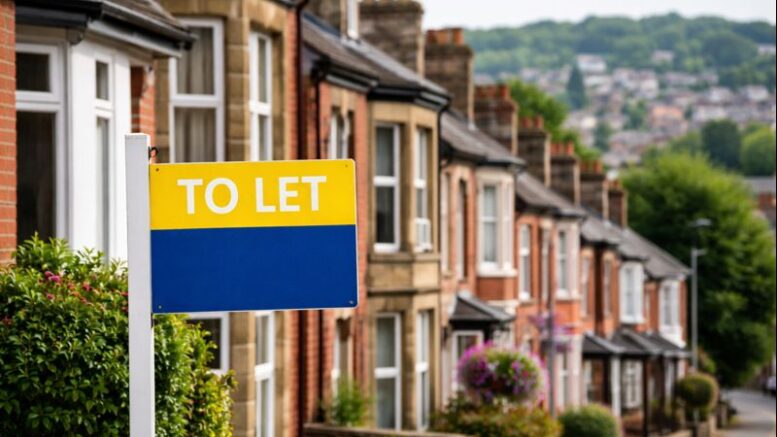
UK rent growth may be levelling off at a national level, but new data shows landlords in traditionally cheaper towns are seeing some of the strongest increases in years. As affordability pressures push renters away from big cities, demand – and yields – are rising sharply in parts of the North, Midlands and Scotland.
Rent growth outlook shifts to smaller towns
According to Q4 2025 data from flatshare platform SpareRoom, average UK room rents rose by just 0.5% year on year, suggesting headline stability. London rents dipped 0.9%, while Scotland also recorded a slight fall of 0.2%.
But that national picture masks a sharp regional divergence. The steepest increases were concentrated in smaller towns rather than major cities, particularly across northern England, the Midlands and parts of Scotland.
Merseyside town Bootle, long regarded as the UK’s cheapest place to rent, saw average room rents jump 18% year on year to £527 a month – an increase of £80. That rise has pushed Bootle out of the UK’s top ten cheapest locations altogether.
Lancashire’s Burnley has now taken its place, with average room rents of £470 a month, despite also seeing notable upward pressure.
Buy-to-let demand grows in cheaper regions
Almost half of the towns and cities with rent rises above 5% are now in the North of England. West Yorkshire’s Keighley recorded a 14% annual increase, taking average room rents close to £600 a month, while Widnes in Cheshire rose 12.8% year on year as renters priced out of Manchester and Liverpool look further afield.
The Midlands is telling a similar story. Stourbridge posted a 17.7% annual rise, with average room rents now £649 a month – £31 more than Birmingham itself, where rents fell 2% over the same period. Wolverhampton rose 9.6% but remains £65 a month cheaper than Birmingham, maintaining its appeal to cost-conscious renters.
For landlords, these shifts highlight where rental demand is now flowing. Areas once dismissed as low-growth are seeing sustained pressure as tenants prioritise affordability and transport links over city-centre postcodes.
Rental affordability pressures remain acute
Despite the slowdown in headline growth, affordability remains stretched. UK average room rents now stand at £749 per month, or £670 outside London. In inner London, renters are still paying close to £1,000 a month on average, even after recent falls.
Matt Hutchinson, director at SpareRoom, warned that stabilisation offers little relief. He said renters are “at breaking point”, with many spending 40-50% of their income on rent.
From a landlord perspective, this explains why demand has intensified in cheaper regions rather than disappearing. High living costs, limited housebuilding and constrained rental supply continue to funnel tenants into more affordable markets, tightening conditions there too.
Industry bodies including the NRLA have repeatedly argued that supply-side reform – not rent controls or additional landlord taxes – is key to easing pressure. Without it, regional rent growth is likely to remain uneven and persistent.
Editor’s view
The narrative of “cooling rents” misses what is really happening on the ground. Demand hasn’t vanished – it has migrated. For landlords, the opportunity is no longer confined to big cities but to well-connected, lower-cost towns now absorbing displaced renters. The question policymakers still avoid is whether enough rental homes are being created to meet that shifting demand.
Author: Editorial team – UK landlord & buy-to-let news, policy, and finance.
Published: 13 January 2026
Sources: SpareRoom Q4 2025 Rental Index; SpareRoom director commentary
Related reading: Market rent growth edges up 2% as landlords brace for 2026 shift