Angela Rayner has returned as Secretary of State for Housing, Communities and Local Government, putting the politician most closely linked to the Renters’ Rights Act back in charge of housing policy as key landlord reforms move toward the next implementation phase.
The appointment was confirmed by Downing Street late on 20 July, with Matthew Pennycook staying in post as housing minister and keeping a direct role in the department’s live reform work. That matters for landlords because several major changes – including the planned private rented sector database and redress scheme – still need detail, timing and delivery.
For landlords, the immediate question is not whether policy is changing direction overnight, but whether Rayner’s return speeds up measures that have already been set in motion. With rental reform still incomplete and compliance costs under pressure, any signal on pace, enforcement or guidance will be watched closely.
Rayner returns with unfinished landlord reforms on the table
Government records show Rayner was appointed to the role on 20 July 2026, having previously held the same brief between July 2024 and September 2025. Her return puts a familiar political figure back over housing, planning and local government at a point when the private rented sector is still waiting for several operational details.
Those include how the new landlord redress system will work in practice, how the private rented sector database will be phased in, and how ministers expect councils to enforce the new regime once the next parts of the Renters’ Rights Act are switched on.
This follows Landlord Knowledge’s report on the government’s late-2026 target for the PRS database rollout under the Renters’ Rights Act, which showed ministers were already working to a phased timetable rather than a single overnight launch. Rayner’s return suggests continuity is more likely than a reset, but landlords still do not have the full operating picture.
Why the housing secretary reshuffle matters for landlords now
Rayner’s reappointment does not in itself create new law. But it does restore a housing secretary who was already associated with Labour’s rental reform agenda and with a tougher political tone toward landlords earlier this year. That raises the chances of firm messaging on enforcement and tenant protections, even if the technical detail continues to be handled by Pennycook and officials.
Landlords also have a practical interest in whether ministerial stability helps the department move faster on guidance. Recent policy announcements have left parts of the sector waiting for answers on compliance costs, database fees and how new complaint routes will interact with existing letting and management arrangements. In a recent Landlord Knowledge report on support for smaller landlords, ministers said no new help package was planned, underlining the likelihood that owners will need to absorb more of the transition burden themselves.
The official appointments notice confirms Pennycook will remain a minister of state in the department and attend Cabinet, which should reduce disruption for work already under way. Landlords will read that as a sign that the department wants momentum rather than a pause. The full ministerial appointments list is published on GOV.UK.
What landlords should watch next
The next test is whether Rayner’s return is followed by fresh speeches, consultation responses or implementation dates tied to the remaining parts of rental reform. If that happens quickly, landlords may need to revisit compliance planning sooner than expected.
There is also a political angle. A returning secretary of state can decide which housing files get the most attention first. If the focus falls on tenant security, standards and enforcement, landlords should expect less room for delay and more pressure to prepare before secondary measures go live.
What this means for landlords
- If you’re still planning for RRA changes: keep watching for database, redress and guidance updates rather than assuming the timetable will slip.
- Watch for: any early statement from Rayner or Pennycook on enforcement, fees or implementation dates.
- Bottom line: the personnel change points to continuity on rental reform, not a softer reset for landlords.
Editor’s view
Rayner’s return will sharpen political attention on the private rented sector even if the legislative path is already set. For landlords, that makes preparation more important than prediction – because the broad direction looks unchanged, while the missing detail could still land quickly.
Author: Editorial Team – UK landlord & buy-to-let news, policy, and finance
Published: 21 July 2026
Sources: GOV.UK, Ministry of Housing, Communities and Local Government
Related reading: Government sets late-2026 PRS database rollout under Renters’ Rights Act
📘 Renters’ Rights Act: Complete Landlord Guide
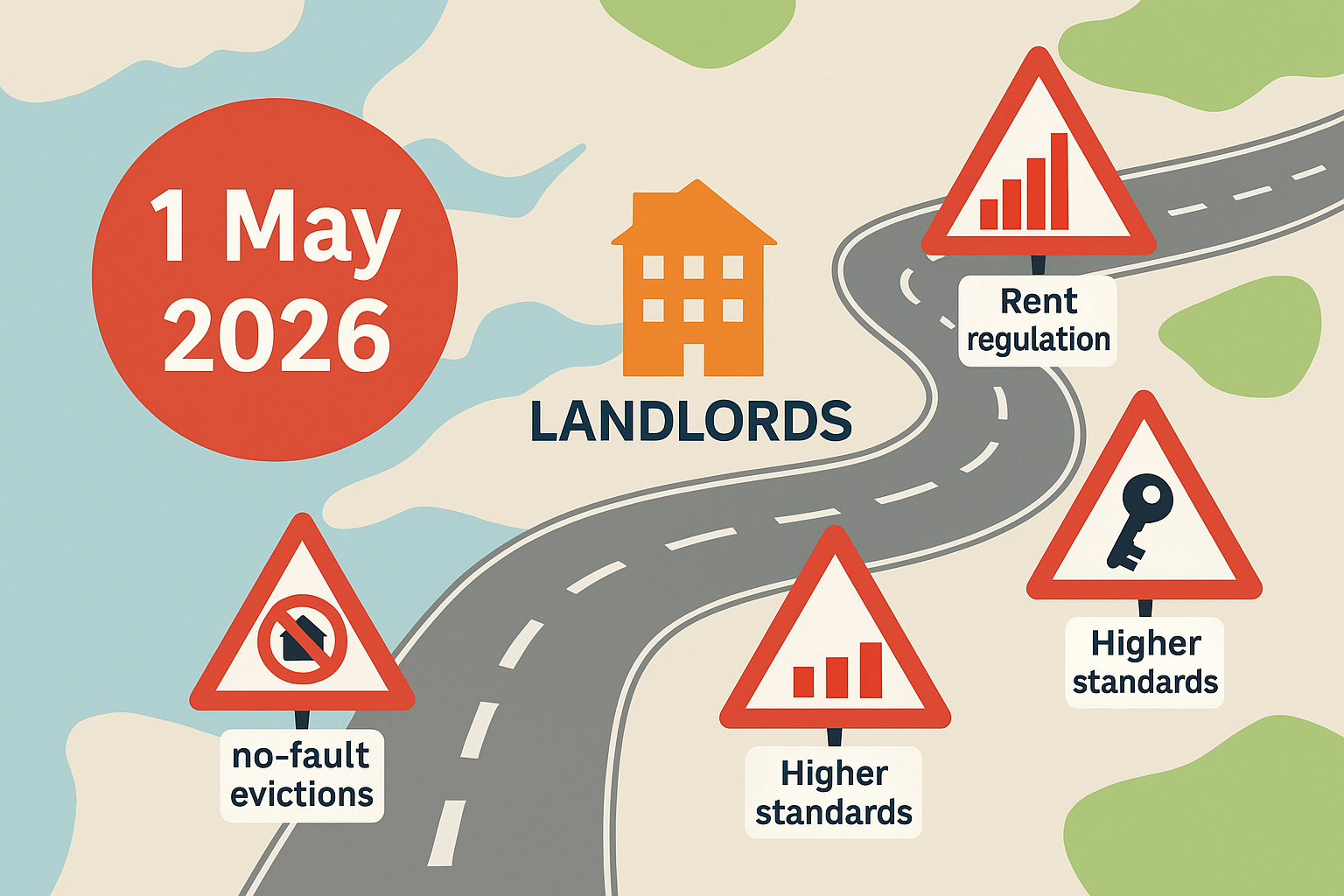
Everything you need to know about the new rules – 1 May 2026