

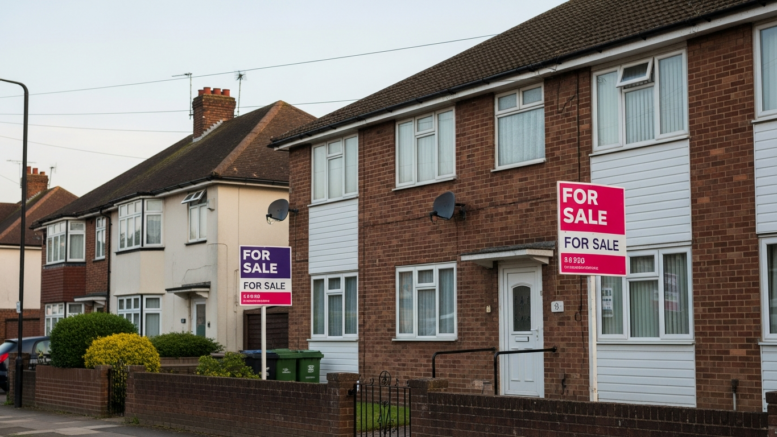
Buy-to-let investors paid an average of just 88.7 percent of the initial asking price in July, with 56 percent of landlord offers coming in at least 10 percent below asking price, according to new Hamptons analysis using Connells Group data.
The latest figures show landlords became more aggressive as the sales market slowed. The share of investor offers pitched 10 percent or more under asking price rose from 48 percent in June to 56 percent in July, and was well above the 45 percent recorded a year earlier. Cash-backed landlords pushed harder still, with 63 percent of their offers in England and Wales landing at least 10 percent below the seller’s first price.
For landlords, the shift matters now because weaker buyer demand is starting to open a clearer buying window. Investors with cash or lower borrowing needs appear better placed to bargain, especially where sellers have been sitting on flats or southern homes for several months.
Cash landlords are pushing hardest on price
Hamptons said landlords accounted for 14.1 percent of all home purchases in Great Britain in July, above the 12.4 percent year-to-date average. That suggests some investors are moving back in while other parts of the market cool.
The pricing gap is striking. While 56 percent of all investor offers were at least 10 percent below asking price, only 25 percent of first-time buyer offers and 27 percent of home-mover offers came in that low. Sellers also appear more willing to bend. In July, 27 percent of investor offers pitched 10 percent or more below asking price were accepted, up from 18 percent a year earlier.
Flats were the weakest point in the market. Sellers of leasehold homes accepted 41 percent of these discounted investor offers, pointing to softer demand and heavier pricing pressure in that part of the market. According to Hamptons research, investors are using chain-free deals and liquidity to push harder where stock is sticking.
This follows Landlord Knowledge’s coverage of Rightmove’s July report showing asking prices fell as supply stayed high, which already pointed to a market losing some seller control. The latest Hamptons figures suggest landlords are now turning that softer backdrop into real purchase discounts rather than just watching from the sidelines.
Southern sellers are proving more exposed
The South East recorded the highest share of low investor offers, with 70 percent coming in at least 10 percent below the initial asking price. The South West followed at 60 percent. Even so, not every bargain offer got through. In the South East, these sub-10 percent offers made up 54 percent of agreed investor deals, while in the South West the figure was 44 percent.
London was different. Only 16 percent of agreed deals there were struck at 10 percent or more below the initial asking price, showing that even in a slower market many sellers in the capital are still resisting deeper cuts. The North East was also firmer than much of the South, with 32 percent of agreed deals falling into that same discount band.
That regional split is useful for landlords weighing where negotiating power is genuinely improving. Combined with Landlord Knowledge’s earlier report that Zoopla saw sales agreed fall 9 percent as price growth slowed, the picture is one of a market where softening is real but uneven.
Discounts may help offset higher finance costs
The obvious catch is funding. A 10 percent discount is most valuable to landlords who can move quickly, avoid long chains and keep borrowing costs under control. That is why the strongest advantage appears to sit with cash investors and with buyers taking on less debt.
There is also a practical warning here. Better purchase prices do not automatically mean better investments if the stock is in weaker flat markets, needs expensive work or sits in areas where rent growth is slowing. But for disciplined buyers, July’s numbers point to a cleaner route into the market than landlords have had for some time.
What this means for landlords
- If you’re buying with cash: July’s data suggests sellers are more open to double-digit discounts than they were earlier this year.
- Watch for: flats and southern markets where stock is lingering and sellers may be under more pressure to deal.
- If you’re borrowing heavily: compare any purchase discount against today’s mortgage costs before assuming the deal stacks up.
- Bottom line: softer sales conditions are creating clearer bargaining power for landlords, but the best opportunities are still highly selective.
Editor’s view
Landlords do not often get to buy when sellers are this flexible. The opportunity is real, but it looks strongest for investors who can move fast, stay disciplined and avoid confusing a cheaper asking price with a genuinely better asset.
Author: Editorial Team – UK landlord & buy-to-let news, policy, and finance
Published: 17 August 2026
Sources: Hamptons, Connells Group
Related reading: Rightmove: July asking prices fall 1% as supply stays high