

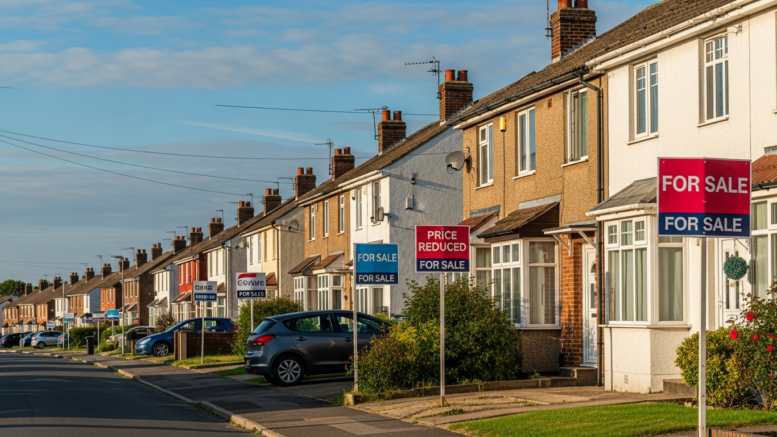
Rightmove says the average asking price of a newly listed home fell 1.0 percent in July to £372,359, a steeper seasonal drop than the 0.2 percent average seen over the past decade. For landlords weighing purchases or exit plans, that points to a market where buyers still have the upper hand and sellers may need to price more sharply to get deals done.
The portal said the number of sales agreed in the first half of 2026 was 6 percent below the same period last year, even though activity held level with the first half of 2024. It also said the stock of homes for sale is close to a 12-year high for this point in the year, giving buyers plenty of choice as mortgage rates remain higher than many expected at the start of 2026.
For property investors, the immediate point is not that the market has stalled, but that pricing discipline matters more when there is more stock on the market and buyers are prepared to wait.
Why July’s bigger price drop matters
Rightmove said sellers are contending with a mix of summer distractions, including hot weather, the World Cup and political change after a new Prime Minister took office. But the bigger issue for landlords is the supply backdrop. When more homes are available, discounts widen faster for vendors who misread demand or test the market at too high a price.
That matters for landlords selling into owner-occupier demand and for buyers looking to expand. A softer asking-price environment can improve entry points, but only if borrowing costs and void risks still stack up. Rightmove’s daily tracker put the average two-year fixed mortgage rate at 4.92 percent, down from 5.08 percent last month but still above the 4.25 percent seen in February.
What landlords should watch in the second half
The report suggests demand is still there when homes are priced correctly. Rightmove said 74 percent of homes that sold and completed this year did so without a price reduction. That is a useful signal for landlords planning disposals after the Renters’ Rights Act changes: realistic pricing may now matter more than waiting for a broad market rebound.
This follows Landlord Knowledge’s report on Zoopla data showing three in five homes listed since January were still unsold, which pointed to a slower sales market even before the latest July dip. Alongside our recent coverage of Rightmove’s warning on new-build supply, the latest figures suggest the market is splitting more sharply between correctly priced stock and listings that linger.
The broader landlord angle is practical. A market with high choice can help investors negotiate better deals, but it can also raise the risk of failed or delayed sales if vendors are chasing last year’s pricing. That is especially relevant for landlords who need a clean exit timeline or want to recycle capital into higher-yielding stock.
Full Rightmove data is available in its July House Price Index update.
What this means for landlords
- If you’re buying: more stock and softer asking prices may create room to negotiate, especially where a listing has already lingered.
- If you’re selling: price realism matters more in a high-choice market, particularly if you need to avoid a drawn-out sale.
- Watch for: whether mortgage-rate competition resumes in late summer, which could improve buyer confidence.
- Bottom line: buyers still have options, so landlords should treat headline house-price resilience with caution.
Editor’s view
A one-month asking-price drop does not make a crash. But for landlords it does reinforce a familiar rule: when supply is high, optimism in the listing price can become an expensive delay.
Author: Editorial Team – UK landlord & buy-to-let news, policy, and finance
Published: 20 July 2026
Sources: Rightmove
Related reading: Zoopla says 3 in 5 homes listed since January are still unsold