

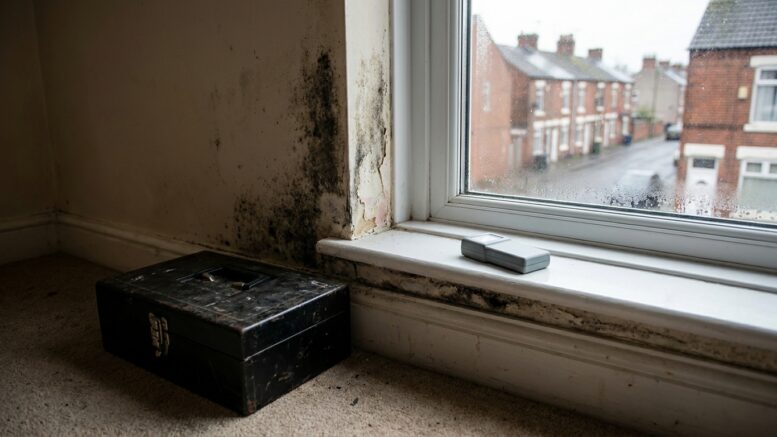
The government has opened a consultation on extending Awaab’s Law to England’s private rented sector, with landlords and other respondents able to submit evidence until 18 December 2026. Ministers are asking how legally enforceable repair timeframes should work for private renters, rather than imposing new deadlines today.
The proposal could take the number of homes covered by the repair-timeframe regime from around four million to roughly nine million, by adding the private rented sector alongside temporary accommodation, supported housing and accommodation for care leavers. The consultation will help determine both the detailed requirements and when they would start.
Private landlords now have a formal opportunity to test how fixed repair times would work where diagnosis, tenant access or specialist contractors slow the response. The present legal duty to address significant hazards remains in place, but the consultation signals that ministers want a faster, more prescriptive repair framework for the sector.
Consultation seeks evidence on private-rented repair deadlines
Awaab’s Law already applies in social housing. Its first phase requires action on emergency hazards within 24 hours and sets a timetable for investigating significant damp and mould issues. Phase two is due to add further serious hazards in social housing from 30 November, subject to parliamentary approval.
Private landlords are not being brought into those social-housing timeframes by this consultation itself. That distinction is important: the government has not yet published a final private-sector timetable, a commencement date or the full operational rules that would apply. The consultation is the stage at which it is seeking evidence on implementation and impacts.
Government figures put the share of private rented homes with a category 1 hazard at about one in 10. The recently updated HHSRS guide for landlords is therefore relevant background, because that rating system is used to assess risks in all housing and sits behind the existing enforcement framework.
Ministers point to faster action on damp and mould
The announcement is part of the Renters’ Rights Act programme. Matthew Pennycook, Housing Minister, said: “We’re now moving to extend it to private landlords so that England’s 11 million private renters can enjoy the same protections.”
This follows Landlord Knowledge’s August report on Awaab’s Law phase two, which set out the extra serious hazards due to enter the social-housing framework from 30 November. The new consultation moves the private rented sector from a future commitment in the Renters’ Rights Act towards the design stage, but it does not yet make those phase-two deadlines binding on private landlords.
The government’s consultation announcement also points to current enforcement powers, including Renters’ Rights Act civil penalties of up to £7,000 where serious hazards are found. The policy change under consultation is about adding set response times, not replacing the existing duty to keep homes safe.
Portfolio landlords and agents need to evidence the path from a tenant report to assessment, works and communication. A basic property maintenance software system or maintenance inbox without priority categories, contractor records or an escalation route will be harder to defend if fixed statutory timeframes are introduced. The final rules could differ from the social model, so copying those deadlines into tenant communications now would be premature.
What this means for landlords
- If you manage repairs yourself: Check that every damp, mould and serious-hazard report has a dated record, an owner and a route for urgent escalation.
- If you use an agent: Ask for its repair triage process and the evidence it keeps of inspections, contractor instructions and tenant updates.
- Watch for: The consultation outcome after 18 December 2026, which should give the first clearer indication of scope, deadlines and implementation timing.
- Bottom line: No new private-sector Awaab’s Law deadline starts today, but the consultation puts repair response systems under closer focus.
Editor’s view
The government has been clear about the destination, but not yet the route. Landlords should use the consultation period to tighten repair records and response lines, while avoiding claims that the social-housing timetable already applies to their properties.
Author: Editorial Team – UK landlord & buy-to-let news, policy, and finance
Published: 09 October 2026
Sources: Ministry of Housing, Communities and Local Government
Related reading: Awaab’s Law phase two adds seven hazards from 30 November
📘 Renters’ Rights Act: Complete Landlord Guide
Everything you need to know about the new rules – 1 May 2026