
Searches for information on the Warm Homes Local Grant have climbed sharply since the summer, according to analysis by the Federation of Master Builders, pointing landlords and owners towards funded energy upgrades ahead of what forecasters say could be a harsh winter.
The analysis, reported on 3 November, tracks a significant upswing in online interest in the England-only grant for privately owned homes rated EPC D or below. The scheme pays for measures ranging from loft, wall and underfloor insulation to solar panels, smart controls and air source heat pumps.
Private rented stock sits squarely in the frame because the grant covers privately rented homes as well as owner-occupied properties, and councils arrange a home survey then organise and pay for agreed work. With minimum EPC C by 2030 still on the horizon and heating season starting, landlords with low-rated stock have a short window to check eligibility while council funding lasts.
What Warm Homes Local Grant covers
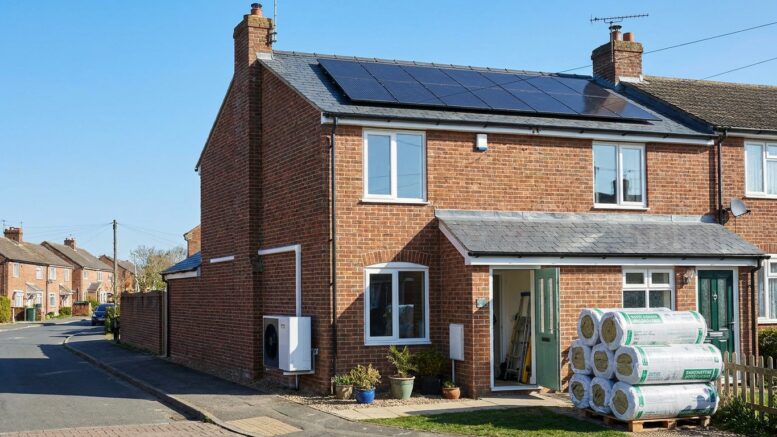
The grant funds improvements that cut energy use and bills in the least efficient privately owned homes. Possible measures include loft, wall and underfloor insulation, draught-proofing, double or triple glazing, energy-efficient doors, solar panel systems, domestic battery storage, smart controls, solar thermal panels, air source and other heat pump technologies, and some electric heating improvements.
Each home is assessed to establish which improvements are needed most. The local council arranges the survey, then organises and pays for work it has agreed with the applicant. Applicants do not pay for council-agreed work, though GOV.UK notes that where a landlord is involved they may need to pay for some of the improvements.
EPC and income rules landlords must meet
To qualify, the home must be in England, be privately owned either by the occupier or a landlord, and carry an Energy Performance Certificate of D, E, F or G. Applicants who do not know the rating can check it during the application.
There are three main household routes. The first is income: households on £36,000 a year or less can qualify where the property tests are met. The second is place: households above that income can still qualify in a priority postcode covering deprivation, fuel poverty or poor building conditions. The third is benefits: households qualify regardless of the income threshold where someone in the home receives certain means-tested benefits such as Income Support, Pension Credit, Universal Credit or housing benefits.
This follows Landlord Knowledge’s September report on the NRLA five priorities for the 2030 rental energy roadmap, which set out industry calls for clearer funding, advice and timelines on the path to higher standards. The latest surge in grant searches suggests landlords are now actively hunting for cash support rather than waiting for final rules, even as Pegasus data puts the EPC C upgrade cost at £11,713 a property.
How to apply before winter pressure builds
Landlords or owners can use the GOV.UK Warm Homes Local Grant page to check eligibility and apply. The council will usually contact the applicant within 10 working days to gather detail and book the survey. Help to use the online service is available on 0800 098 7950.
Availability depends on local council funding, so timing and area matter. Properties in England only qualify, and separate schemes apply in Scotland, Wales and Northern Ireland.
What this means for landlords
- If you let EPC D to G stock in England: check the grant now and talk to tenants on low incomes or in priority postcodes, as their household status can secure the funding.
- Watch for: council funding limits and the 10-day contact window, plus any landlord contribution where the council says the owner must part-fund work.
- Bottom line: free surveys and funded insulation, glazing, solar or heat pumps can cut bills and lift EPC scores well before the 2030 target bites.
Editor’s view
Grants that actually pay for work, rather than just offering advice, are rare enough to take seriously. Landlords who complain about EPC costs but skip a funded survey will have little sympathy if they face a rush and a bigger bill closer to 2030.
Author: Editorial Team – UK landlord & buy-to-let news, policy, and finance
Published: 04 November 2026
Sources: Federation of Master Builders, GOV.UK Warm Homes Local Grant guidance
Related reading: NRLA sets five priorities for 2030 rental energy roadmap
EPC Rules for Landlords: What You Need to Know
Minimum EPC C required by 2030 – new assessment rules from late 2027