

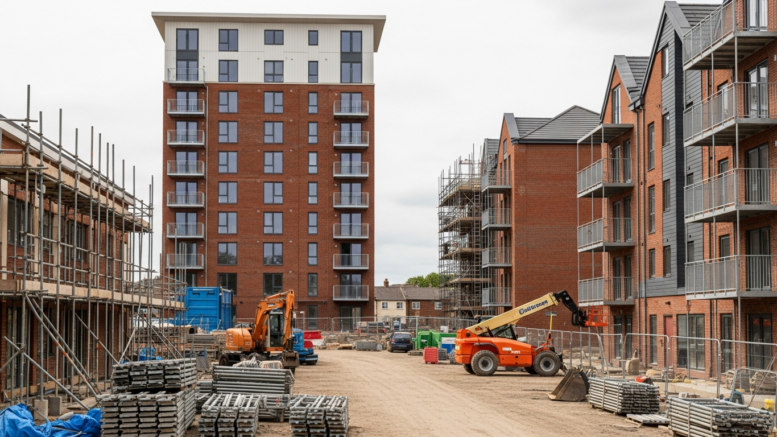
Build to rent starts across the UK have fallen 79 percent in the year to June, according to Real Estate:UK research prepared by Savills, with the sharpest hit outside London where starts were down 84 percent. For landlords and investors, the immediate point is that a tenure still delivering about 8 percent of new homes is now bringing far fewer schemes on site.
The new detail is not just the scale of the drop in starts. Savills’ Q2 2026 figures also show homes under construction were down 21 percent year on year, and annual completions have now exceeded starts for 10 straight quarters. That means the pipeline is being drained faster than it is being refilled, even with more schemes winning planning approval.
Why it matters now is simple: if institutional rental supply keeps slowing while tenant demand stays firm, pressure does not disappear – it shifts. Smaller landlords can face tougher competition for stock when buying, while rental demand can stay stronger for longer in markets where new professionally managed supply was meant to add capacity.
BTR pipeline is shrinking faster outside London
Real Estate:UK said the biggest fall in starts was outside the capital, where regional schemes saw the sharpest drop despite what the group described as strong tenant demand. Across the whole market, homes under construction in London fell 27 percent year on year, compared with a 19 percent fall in the regions.
The numbers point to a viability problem rather than a simple planning slowdown. The sector is still getting schemes approved, but fewer of those approvals are turning into active building sites. In practice, that leaves investors favouring established income-producing assets over riskier development starts.
This follows Landlord Knowledge’s coverage of Savills: prime rents rise as RRA costs feed through, which showed rents still rising in parts of the market as landlords price in cost pressure and tighter regulation. The latest BTR figures suggest the supply side is not catching up fast enough to soften that pressure, particularly beyond London where development economics are coming under heavier strain.
Political uncertainty is now part of the investment test
Real Estate:UK said the viability squeeze has been made worse by recent policy uncertainty, including debate around rent controls and wider property tax changes. A survey carried out for the group found all respondents would reduce BTR investment and avoid mayoral areas if rent controls were introduced.
That matters well beyond large institutions. When big rental developers hold back, the hoped-for boost to overall rental supply arrives later or not at all. For landlords, that can keep local demand tight, but it can also mean less liquidity, fewer exit routes and more competition for sites from buyers who want completed stock rather than development exposure.
There is also a wider market signal here. As Landlord Knowledge reported when Rightmove: rental enquiries drop to nine per listing as supply improves, renter demand has cooled from panic levels but remains high by historic standards. If new BTR supply slows at the same time, the market may struggle to move from shortage to balance.
Jacqui Daly of Savills said build to rent has become an important source of housing supply because investors can help housebuilders open sites and underwrite delivery. That helps explain why a starts collapse matters to the wider rental market, not just to specialist developers.
What this means for landlords
- If you’re buying: weaker BTR development can keep competition for existing rental stock firmer in supply-constrained areas.
- Watch for: whether policy signals on rent controls, tax and planning become clearer – uncertainty is now a direct investment risk.
- Bottom line: a 79 percent drop in starts is not just a BTR story – it is another sign that new rental supply is struggling to keep pace with demand.
Editor’s view
The striking part of this update is not that BTR developers are under pressure. It is that the pipeline has now been running backwards for 10 quarters. If ministers want more rental supply, they cannot keep treating delivery confidence as a side issue.
Author: Editorial Team – UK landlord & buy-to-let news, policy, and finance
Published: 5 August 2026
Sources: Real Estate:UK, Savills Residential Research
Related reading: Rightmove: rental enquiries drop to nine per listing as supply improves