

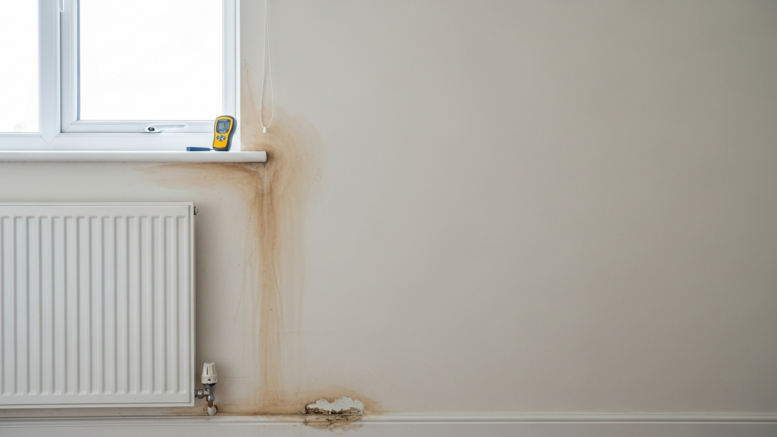
Government modelling has shown that damp remains a stubborn problem across England’s rented homes, with 10 percent of private rented dwellings affected in 2024 and rented homes in parts of the Midlands, the North and London facing some of the highest risks.
The fresh local authority housing stock condition release also shows that 15 percent of homes in England were classed as non-decent in 2024, while 8 percent had a Category 1 hazard. For landlords, the timing matters because ministers are already under pressure to bring the Decent Homes Standard into the private rented sector before 2035 and councils now have updated HHSRS powers in force.
That leaves landlords with a narrower margin for delay. A patch of condensation or water ingress that once sat on a maintenance list now carries more compliance risk, especially where damp sits alongside fire, electrical or repair issues.
Damp risk is not spread evenly
The Ministry of Housing, Communities and Local Government’s new modelling says many local authorities across the Midlands and North recorded high rates of damp in the private rented sector, while central London boroughs were also among the areas most likely to have rented homes with damp. Across England, homes in wetter areas were slightly more likely to be affected.
The report separates externally driven damp such as penetrating or rising damp from internally driven damp linked to serious condensation. That distinction matters for landlords because the repair route, evidence trail and cost can differ sharply from one case to another.
This follows Landlord Knowledge’s report on MPs pushing faster Decent Homes rules for landlords, which showed growing pressure on ministers to tighten standards earlier. The latest data adds a local map to that argument and makes it harder for landlords to assume damp is a marginal issue.
Why the new data matters now
Because the figures are broken down at local authority level, councils have a stronger evidence base when deciding where to focus inspection and enforcement work. Landlords operating older terraced stock in high-risk areas may find that broad national averages no longer offer much comfort if local patterns point the other way.
The figures also land just after the latest HHSRS penalty changes took effect for landlords. That gives this release a practical edge: it is not just another housing quality dataset, but a sign of where future enforcement attention could land.
Landlords who have recurring condensation complaints, unresolved leaks, ageing electrics or poor ventilation in pre-1980 stock are likely to be in the highest-risk group. The government’s 2024 local authority housing stock condition modelling report makes clear that damp, non-decency and Category 1 hazards continue to overlap in parts of the rented sector.
What this means for landlords
- If you own older rented stock: review open damp complaints now and check whether the root cause is condensation, leaks, rising damp or disrepair.
- Watch for: more targeted council action in areas where local modelling shows clusters of damp and non-decent homes.
- Do next: keep inspection notes, contractor reports and tenant communication in one place in case the council asks for evidence.
- Budget for: ventilation, roof, guttering and insulation work where repeat complaints keep returning.
- Bottom line: the compliance risk around damp is becoming more local, more measurable and harder to brush off.
Editor’s view
The important point here is not just that damp remains common. It is that councils now have more local evidence to justify where they look first, and landlords with weak repair records will stand out faster.
Author: Editorial Team – UK landlord & buy-to-let news, policy, and finance
Published: 06 July 2026
Sources: MHCLG local authority housing stock condition modelling 2024
Related reading: MPs push faster Decent Homes rules for landlords