A Rotherham prosecution has underlined a simple point for landlords: councils do not need a huge rogue operator case to take action. Basic health and safety failures left unresolved after formal notice are still enough to end in court and trigger a financial penalty.
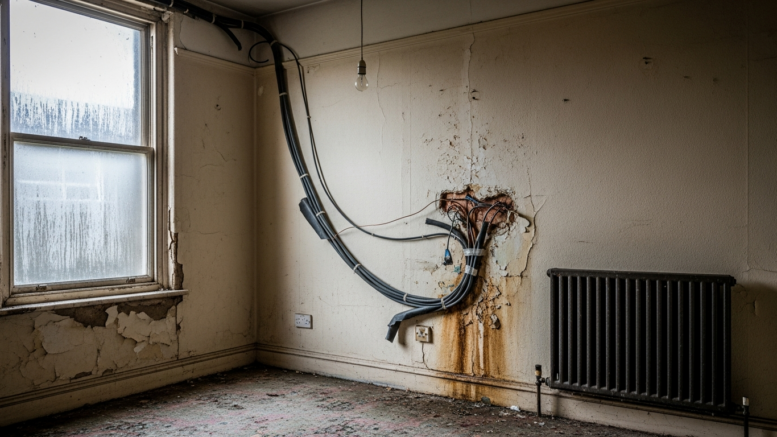
Rotherham Council said landlord Zaffar Hussain, of Sheffield, was responsible for a privately rented property where officers found exposed electrical wiring, no smoke alarms, fire safety concerns, poor security, excess cold, defective windows and signs of rodent infestation.
Unsafe conditions led to a £6,664.30 bill
After the inspection, the council served a legal notice requiring works. It later said the work was either not completed or left unfinished, leaving the hazards in place. Hussain was convicted and ordered to pay a £4,000 fine, a £1,600 victim surcharge, £500 compensation and £564.30 in prosecution costs – a total of £6,664.30.
The case is not remarkable because of the amount. It matters because it shows the kind of ordinary disrepair and safety breaches that can still lead to prosecution when councils decide a landlord has ignored their chance to put things right.
This follows Landlord Knowledge’s report on Oxford finding serious hazards in one in three licensed rentals, which showed councils are still finding plenty of basic safety failings once they look closely enough. The Rotherham case adds another reminder that fire safety, cold and repair issues remain routine enforcement territory rather than edge cases.
Why smaller enforcement cases matter
For landlords, the important detail is that this was not framed as a complicated legal test case. It was a standard compliance failure after a notice had been served. That makes it a more useful warning than some of the six-figure stories, because it shows the sort of case local authorities can repeat more easily.
It also points to a familiar mistake. Once a formal notice lands, partial works and slow progress rarely look persuasive if the property still has obvious hazards. Councils will usually judge the outcome, not the effort claimed along the way.
What this means for landlords
- If you receive a formal notice: treat it as a live enforcement risk, not an admin issue to park until contractors are convenient.
- Prioritise first: electrics, smoke alarms, fire safety, excess cold and security issues before cosmetic work.
- Watch for: councils using smaller prosecutions to send local compliance messages after the RRA launch.
- Bottom line: ordinary hazards can still produce court action if landlords leave them unresolved after notice.
Editor’s view
The biggest landlord fines get the headlines, but smaller prosecutions like this are often the more realistic benchmark. They show what councils will pursue when a property still looks plainly unsafe after formal warning. For landlords, that is the everyday compliance risk that matters most.
Author: Editorial Team – UK landlord & buy-to-let news, policy, and finance
Published: 13 May 2026
Sources: Rotherham Council
Related reading: Oxford finds serious hazards in one in three licensed rentals