

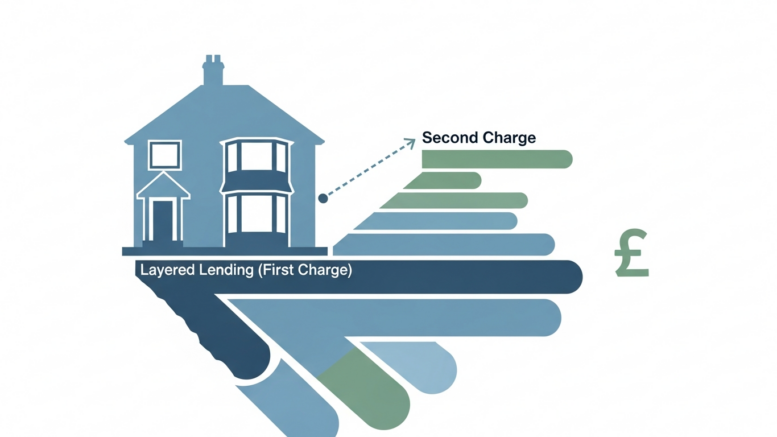
Second charge mortgage lending rose 33 percent by value to £625 million in the first quarter, according to new Finance & Leasing Association figures, as borrowers looked for extra finance without disturbing their existing main mortgage.
The FLA said volumes rose 22 percent year on year to almost 11,500 new agreements in the three months to March, while March alone delivered £228 million of new business – up 36 percent on the same month last year. Over the latest 12-month period, lending reached £2.297 billion, up 27 percent.
Why the figures matter for landlords
For landlords, second charge growth is a useful signal rather than a mass-market buy-to-let trend. It suggests more borrowers are deciding that adding secured debt on top of an existing mortgage is preferable to remortgaging the whole property at a worse rate.
That will matter most to landlords who fixed borrowing before the recent rate cycle and do not want to give up a cheaper first-charge mortgage just to raise capital for works, tax bills or portfolio reshuffling. In that sense, second charge borrowing is becoming more of a defensive tool than a growth story.
Borrowing flexibility still comes with risk
This follows Landlord Knowledge’s earlier coverage of refinancing delays raising landlord costs, which pointed to the pressure created when cheap legacy debt falls away. The latest second charge figures suggest some borrowers are trying to hold on to that older debt for longer rather than replace it outright.
It also sits alongside Landlord Knowledge’s report on landlords waiting for cheaper debt after the latest Bank Rate hold. The fresh FLA second charge lending update makes clear that demand for flexible borrowing remains firm even without a full return to lower mortgage pricing.
The catch is that second charge lending can solve one problem while creating another. Landlords who stack debt onto already tight rental margins may win short-term cashflow breathing space, but they also increase repayment pressure if voids, repairs or arrears rise later in the year.
What this means for landlords
- If you’re sitting on an older low-rate mortgage: a second charge may be worth comparing against a full remortgage.
- If you need funds for works or tax: check whether the extra flexibility is worth the higher overall debt burden.
- Watch for: specialist lenders pitching second charge products more directly at portfolio borrowers.
- Bottom line: second charge borrowing is growing because many landlords still do not want to refinance their whole loan stack.
Editor’s view
Rising second charge lending is not automatically a sign of confidence. In many cases it looks more like a workaround for a mortgage market that still is not cheap enough for landlords to refinance cleanly.
Author: Editorial Team – UK landlord & buy-to-let news, policy, and finance
Published: 13 May 2026
Sources: Finance & Leasing Association, Mortgage Solutions
Related reading: Portfolio landlords warned: Refinancing delay could cost over £23,000