

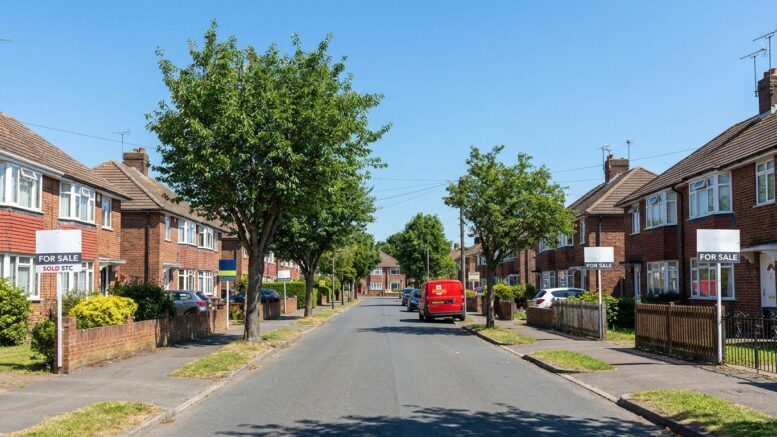
UK annual house price growth slowed to 0.9 percent in August, the fourth monthly slowdown in a row, with the average UK home priced at 273,000 pounds. Monthly prices rose 0.3 percent, down from 0.6 percent in July, according to the UK House Price Index.
England recorded the weakest annual rise at 0.4 percent to 294,000 pounds. Wales rose 3.1 percent to 216,000 pounds, Scotland rose 2.9 percent to 198,000 pounds and Northern Ireland rose 9.2 percent to 202,000 pounds. London fell 2.2 percent over the year, an improvement on the 3.2 percent fall in July, but flats in the capital dropped 5.0 percent.
Softening prices alongside steady rents change the maths for buyers who can still obtain finance. Yields have room to firm where sellers cut asking prices, yet higher mortgage rates and Budget uncertainty are keeping many movers on the sidelines.
Regions split as South lags the North
The North East led English annual growth at 3.2 percent, down from 4.7 percent in July. London remained the weakest performer, with the 2.2 percent yearly fall masking wide local gaps. Agents report realistic pricing is now decisive, with stock at its highest for this time of year since 2014.
Industry reaction pointed to affordability pressure and rate volatility. OnTheMarket said more homes on the market and mixed lender pricing are holding back growth, while Zoopla said enquiries and sales have been hit as buyers wait for the Budget. Propertymark described the market as resilient despite energy and fuel costs squeezing household budgets.
Full tables sit in the UK House Price Index summary for August 2026, which also notes provisional estimates are likely to be revised as more completions data feeds through. The September index is due at 9.30am on 18 November 2026.
What slowing growth means for rental supply
Slower price growth does not automatically bring more landlord purchases. Higher borrowing costs, stamp duty and regulation still weigh on net returns, even as flat prices in parts of London open selective value for cash buyers.
This follows Landlord Knowledge’s report on the 500,000-home shortfall against the 2029 target, which underlined how far supply sits below government ambitions. In that context, a cooler sales market can keep more tenants renting for longer, supporting demand for well-priced lets.
Affordability strains cut both ways. Landlord Knowledge’s analysis of Zoopla data on family homes affordable on average incomes showed how few larger homes remain within reach for buyers. Landlords offering mid-market family stock in job-strong areas remain best placed if sales volumes stay soft.
What this means for landlords
- If you are looking to buy: target areas where asking prices have been trimmed and stock is high. A 0.3 percent monthly rise nationally leaves room to negotiate on stale listings.
- Watch for: November rate decision chatter, Budget tax talk and lender repricing. A small rate move shifts higher-LTV investment cases fast.
- Bottom line: flat national prices with regional splits favour selective buying. Price discipline and yield cover matter more than betting on capital growth.
Editor’s view
A fourth slowdown confirms the market is marking time. For landlords with cash or strong equity, that pause is the opening – but only on homes priced to sell, not hope value.
Author: Editorial Team – UK landlord & buy-to-let news, policy, and finance
Published: 23 October 2026
Sources: HM Land Registry, ONS
Related reading: 500,000-home shortfall warning