

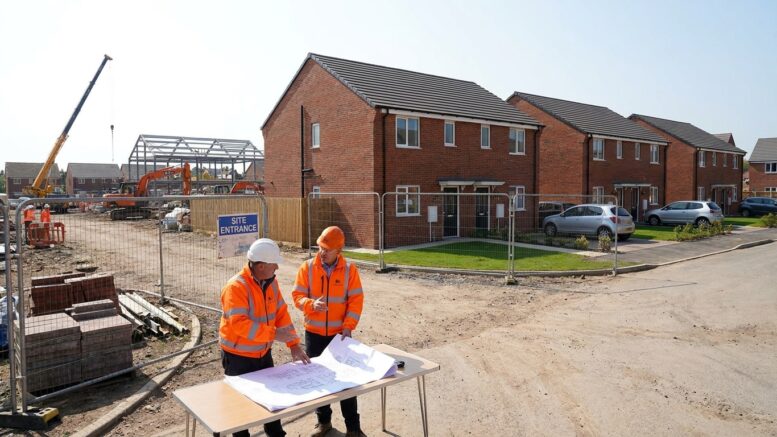
The government has confirmed the first wave of allocations from its £39 billion Social and Affordable Homes Programme, with nearly £10 billion earmarked to support more than 70,000 homes across England.
The announcement turns a broad funding promise into named delivery money for 33 strategic partners, including councils and housing associations, and adds a more immediate timeline to the push for new social and affordable rented supply.
Private landlords should pay attention because this is one of the clearest signs yet that ministers want more pressure taken off the private rented sector through a larger social rent pipeline – even if the delivery gap remains wide.
First £10bn wave moves housing pledge into delivery phase
The government’s £39 billion commitment had already raised questions about targets and delivery. A new MHCLG announcement on the first wave of funding now says nearly £10 billion has been allocated to support over 70,000 homes, with around 60 percent of homes delivered through the partnerships expected to be for social rent.
The release said councils are being pushed back toward large-scale housebuilding, with strategic partner status giving them longer-term funding certainty through Homes England. Ministers also said a further £46 million will be invested over the next three years to strengthen council capacity and skills.
That matters because temporary accommodation pressure, waiting lists and social rent shortages have all been feeding back into private rental demand. If more genuinely affordable homes do come through, some of that pressure could ease at the margin – though not quickly.
Landlords still face a long wait for any market relief
The key point for landlords is timing. Even a large funding allocation does not create immediate competition for existing private stock. Planning, procurement, starts and completions all take time, and many local markets will feel supply pressure long before new homes arrive.
This follows Landlord Knowledge’s report that a £39 billion social rent push may still need another £8 billion. The latest funding round is a real step forward, but it does not erase questions over pace, target clarity or whether enough of the programme lands in the highest-pressure rental markets.
There is a political timing hook here too. Ministers are trying to show movement after criticism that headline housing pledges were not matched by a clear affordable homes target. By publishing real allocations now, they are signalling that delivery rather than consultation is supposed to be the next phase.
For landlords, the practical effect is indirect but important. More social rent supply, if it arrives, could soften demand at the lower end of the market over time. Until then, the existing mismatch between household need and available stock is likely to keep supporting demand for decent, well-priced private rentals.
What this means for landlords
- If you operate in high-demand family rental markets: do not expect immediate relief from public housebuilding announcements alone.
- If you track long-term local demand: watch where the funded schemes are concentrated and whether councils actually convert allocations into starts.
- Watch for: future funding waves, target updates and whether social rent delivery accelerates outside London as promised.
- Bottom line: the government has moved from promise to allocations, but the private rented sector will still carry much of the pressure while those homes are being built.
Editor’s view
This is more meaningful than another housing promise because actual money has been attached. But landlords should not confuse announced allocations with completed homes – the pressure in the rental market will ease only if spades hit the ground fast.
Author: Editorial Team – UK landlord & buy-to-let news, policy, and finance
Published: 27 August 2026
Sources: MHCLG, Homes England
Related reading: Government still has no affordable homes target despite £39bn pledge