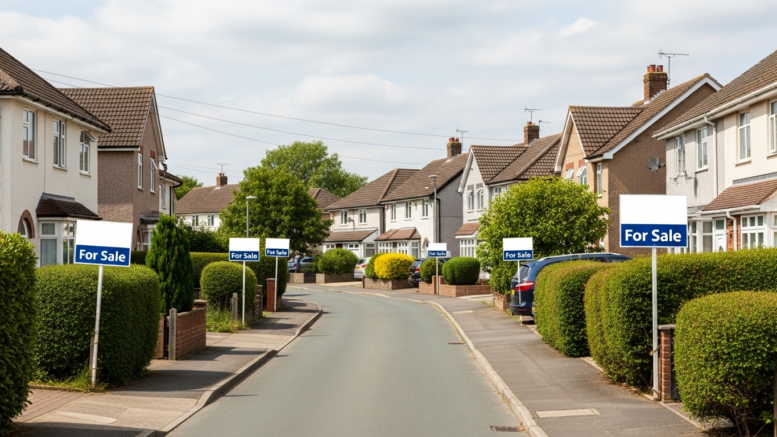
Zoopla says UK house price growth slowed to 1.3 percent in June as agreed sales fell 9 percent year on year, with higher mortgage rates and political uncertainty producing a sharper summer slowdown than normal. For landlords, the key point is that weaker buyer activity is opening up more room to negotiate, especially in softer southern markets where stock is building.
The latest index says almost 30 percent of homes listed since the second quarter remain unsold without a price reduction, while the average UK home is still worth £272,800 and has gained £3,400 over the past year. That mix of slower sales and still-positive pricing matters because it points to a market that is cooling unevenly rather than rolling over.
For buy-to-let investors, the timing matters. If mortgage pricing does not worsen again, the summer pause could improve entry terms in areas where sellers need to move before autumn.
Buyer hesitation is growing but the market has not stalled
Zoopla says the North East is the only region where sales agreed are higher than a year ago, while London and southern England are under more pressure. House price growth has already slipped into negative territory in London and the South East, and the business-facing report says national averages are now masking very different local conditions.
That is the part landlords should pay attention to. A national slowdown does not automatically mean every purchase market is turning in an investor’s favour at the same speed. In stronger northern markets, competition can still hold up. In weaker higher-value areas, sellers may have to meet the market faster.
More stock is improving landlord negotiating power
This follows Landlord Knowledge’s Rightmove: July asking prices fall 1% as supply stays high and Halifax: second price dip keeps landlords in buyers market. Together, they point to the same pattern: more homes are sitting on the market for longer, and that is starting to change the balance between asking price ambition and what buyers will actually pay.
For landlords, the practical angle is not just headline house price growth. It is the build-up in unsold stock and the widening regional split. Zoopla’s July 2026 House Price Index says almost one in three homes listed since Q2 is still unsold without a reduction, which suggests some vendors are still priced for a stronger market than the one in front of them.
That creates opportunity, but only for investors who stay selective. Flats are already showing annual price falls in Zoopla’s data, which may improve entry points for some landlords, but soft resale conditions can also make exits slower. The better read is that buying conditions are improving in parts of the market, not across the board.
What this means for landlords
- If you’re buying this summer: test whether local stock levels and time-on-market data give you room to negotiate below asking price.
- Watch for: whether mortgage rates stay broadly stable into September, because Zoopla expects that to shape any autumn recovery.
- Bottom line: slower sales are giving landlords a better shot at price negotiation, but the opportunity is highly regional.
Editor’s view
This is not a crash story. It is a pricing story. Landlords who keep mistaking a softer market for a universally cheap market will overpay, while those who track local stock and seller urgency should find better buying windows over the next few months.
Author: Editorial Team – UK landlord & buy-to-let news, policy, and finance
Published: 30 July 2026
Sources: Zoopla
Related reading: Rightmove: July asking prices fall 1% as supply stays high