

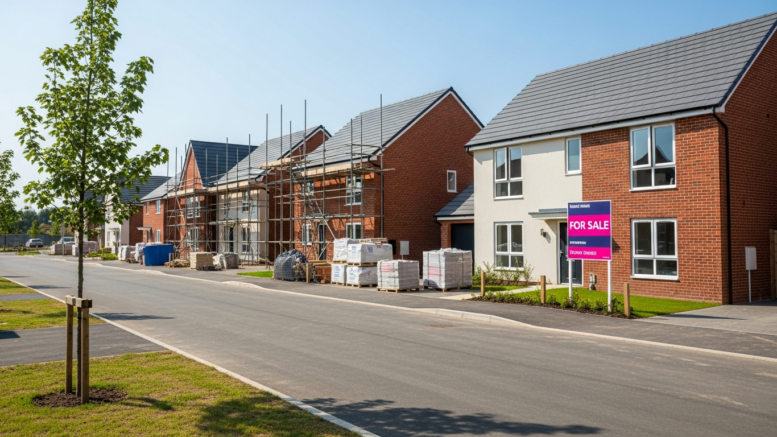
The number of new housing developments being brought to market has fallen to its lowest level since January 2017, according to new Rightmove analysis, adding fresh pressure to the government’s wider housing supply target.
Rightmove said new-build developments listed for sale are now at a nine-year low even as ministers continue to talk up higher delivery. The latest figures sharpen the gap between headline building ambitions and the stock actually reaching buyers now.
For landlords, the immediate significance is not just for owner-occupiers. Thin new-build supply can keep pressure on the wider housing market, limit move-up activity and leave rental demand firmer for longer in areas where buying options stay restricted.
Rightmove says new developments have dropped to a nine-year low
The property portal said higher mortgage rates are still making conditions harder for housebuilders and agents, while affordability remains a barrier in many parts of the market.
It added that the total number of homes for sale across new-build and second-hand stock has risen over the past four years, but that supply is still falling short in the locations and price brackets buyers need most.
That matters for landlords because constrained delivery does not only affect first-time buyers. It also slows the flow of housing through the wider market, which can keep renters in place longer and support rental demand in undersupplied areas.
Supply pressure keeps the rental backdrop tight
This follows Landlord Knowledge’s report on Scottish housebuilding dropping to a decade low, which pointed to the same underlying issue from a different angle. The latest Rightmove figures suggest the supply problem is not limited to one nation or tenure.
It also sits alongside Landlord Knowledge’s earlier coverage of Savills’ warning that England could miss the 1.5 million homes target by 662,500, reinforcing the gap between political targets and market delivery.
The more cautious take for landlords is that a supply shortage is not automatically good news. If buyer affordability remains weak and delivery stays thin, governments can come under even more pressure to intervene across the housing system, including through rental policy.
Rightmove’s new homes coverage and market updates can be found on its news site.
What this means for landlords
- If you invest in undersupplied areas: weaker new-build delivery may help keep rental demand resilient.
- If you are weighing an exit: thin supply can support values locally, but affordability limits may still cap buyer appetite.
- Watch for: fresh government pressure for buyer support or planning reform as supply targets drift further out of reach.
- Bottom line: supply shortages can support the rental market, but they also raise the risk of more political intervention.
Editor’s view
A supply crunch can flatter rental demand, but landlords should not mistake that for stability. When housebuilding slips this far behind political promises, the policy response rarely stops at planning.
Author: Editorial Team – UK landlord & buy-to-let news, policy, and finance
Published: 14 July 2026
Sources: Rightmove
Related reading: Scottish housebuilding drops to decade low