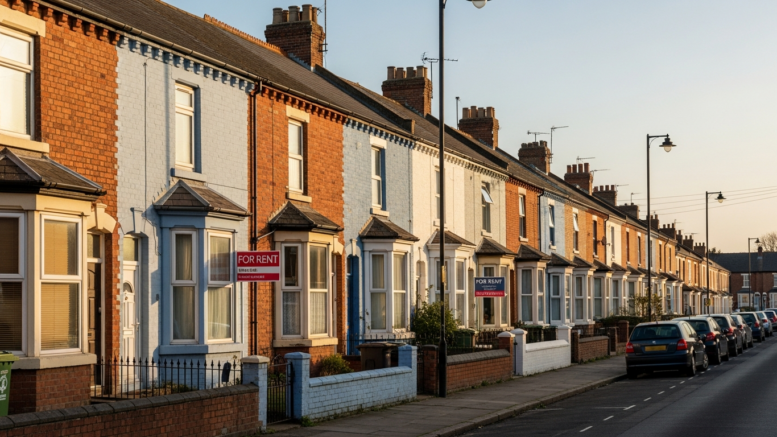
Renters are now spending 40.9 percent of their income on rent, down from 41.5 percent a year ago, as stronger wage growth helps ease affordability pressures across most of the country.
New research from Dwelly shows that rents increased by 3.9 percent over the past year while earnings grew by 5.4 percent – helping to close the gap between what tenants earn and what they pay.
London sees biggest affordability improvement
London has recorded the largest reduction in affordability pressure despite remaining the least affordable region. Earnings in the capital grew by 6.9 percent compared to rental growth of just 2.1 percent, cutting the proportion of income spent on rent by 2.33 percentage points.
However, London renters still spend 49.5 percent of their income on rent – nearly half their take-home pay – underscoring why the capital continues to see tenants moving to surrounding areas in search of better value.
This follows Landlord Knowledge’s March report on house price affordability, which showed property prices remaining at 7.6 times average earnings despite modest improvements in some regions.
Regional divide emerges
Not all regions have benefited from wage growth outpacing rents. The North East has seen affordability worsen, with rents rising 7.9 percent against earnings growth of just 4.4 percent – pushing the proportion of income required to cover rent up by 0.87 percentage points.
The North West saw a similar pattern, with rental growth of 6.1 percent outstripping wages growth of 4.2 percent. More modest deteriorations occurred in the South West, Yorkshire and the Humber, and the West and East Midlands.
Scotland, the South East, and Wales all saw improvements, with earnings growth exceeding rental increases.
Most affordable regions unchanged
Despite worsening affordability, the North East remains the most affordable region with renters spending just 26.9 percent of income on rent. Wales follows at 28.5 percent and Yorkshire and the Humber at 28.6 percent.
At the other end of the scale, London’s 49.5 percent figure dwarfs every other region. The South East comes second at around 35 percent of income.
What this means for landlords
- If you’re setting rents: Affordability constraints are real – wage growth is helping, but pushing above market rates risks extended void periods as tenants have more choice.
- Watch for: Regional patterns diverging further. Strong rental growth in the North may be hitting natural limits as affordability tightens.
- Bottom line: The rental market is stabilising because wages are catching up, not because rents are falling. This creates breathing room, but landlord cost pressures from higher mortgage rates remain unresolved.
Editor’s view
Wage growth doing the heavy lifting on affordability is good news for tenants and, indirectly, for landlords seeking sustainable rent levels. But the North East and North West figures show that strong regional rental growth can quickly run into affordability ceilings. Landlords in these areas should pay attention.
Author: Editorial Team – UK landlord & buy-to-let news, policy, and finance
Published: 1 April 2026
Sources: Dwelly
Related reading: Newport leads UK rent surge with 47 percent rise in five years