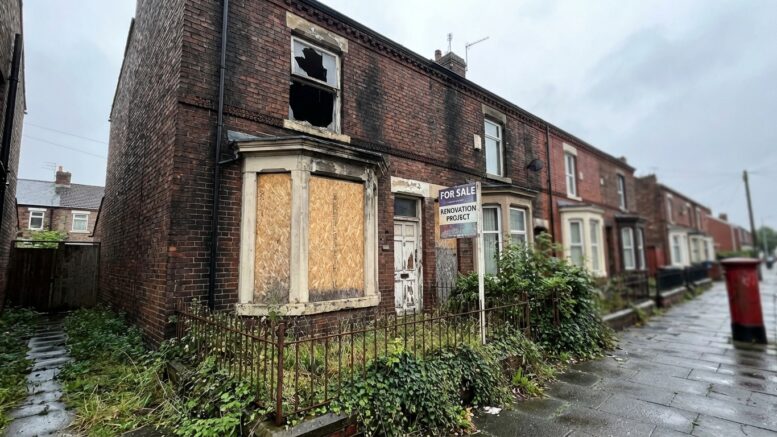
Bridging loan volumes have surged 95 percent since 2022 as investors target empty and derelict properties that traditional lenders will not finance, according to specialist lender Together.
The figures coincide with National Empty Homes Week, which runs from 9 to 15 March and highlights the more than one million vacant properties across England – equivalent to one in every 25 homes.
Traditional mortgages unsuitable for vacant stock
Standard mortgage products are typically unavailable for properties deemed uninhabitable, creating a barrier for investors willing to take on renovation projects. Specialist bridging finance has filled this gap, allowing buyers to acquire run-down properties, complete refurbishments, and refinance onto conventional buy-to-let mortgages.
Elliot Vure, Sales Director at Together, said: “While the nation often focuses on building new homes, a large and often overlooked percentage of homes in England are already empty.”
He added: “Traditional mortgage products often aren’t suitable for empty or dilapidated homes, especially where a property is deemed uninhabitable. That’s where specialist lending can play a vital role.”
Council enforcement gaps persist
Vure highlighted shortfalls in local authority capacity to tackle the empty homes problem directly. “There is a shortfall in local authority power and resources for identifying the empty homes and taking action on empty home complaints within councils,” he said.
This echoes findings from Landlord Knowledge’s coverage of the Empty Homes Coalition, which called for a national strategy after social housing voids reached 310,000 units.
Research commissioned by Together found that 52 percent of UK adults pass a deserted building every week, with half of the public calling for abandoned properties to be revived for housing, business or retail use.
Opportunity for landlord investors
For buy-to-let investors, vacant properties can offer below-market-value acquisition opportunities combined with the potential for significant value uplift through refurbishment. However, the strategy requires careful financial planning.
Bridging loans typically carry higher interest rates than standard mortgages and must be repaid within 12 to 24 months. Investors need confidence that renovation works can be completed on budget and that the property will achieve the valuation required for refinancing.
Vure urged the industry to support borrowers willing to take on neglected homes. “As an industry we should be encouraging and supporting borrowers who are willing to take on vacant or neglected homes,” he said. “That could mean greater flexibility on property conditions at purchase or exploring partnerships with local authorities where empty homes are a particular issue.”
Information on preparing finance for property auctions – where many vacant properties appear – is available in our earlier coverage.
What this means for landlords
- If you’re considering vacant property investment: Ensure bridging finance is arranged before bidding at auction – most require completion within 28 days.
- Watch for: Hidden costs in derelict properties including structural issues, asbestos removal, and service reconnection fees that can exceed initial estimates.
- Bottom line: The numbers suggest appetite for empty home renovation is growing, but success depends on accurate costing and reliable exit finance.
Editor’s view
A million empty homes alongside a housing crisis seems absurd on its face, but the economics explain the gap. Many vacant properties require investment that exceeds their post-renovation value, particularly in weaker markets. The 95 percent increase in bridging lending suggests more investors are finding viable projects, but landlords should approach with caution – bridging finance punishes delays and cost overruns severely.
Author: Editorial Team – UK landlord & buy-to-let news, policy, and finance
Published: 10 March 2026
Sources: Together, Action on Empty Homes
Related reading: Coalition urges national empty homes strategy as voids hit 310,000