

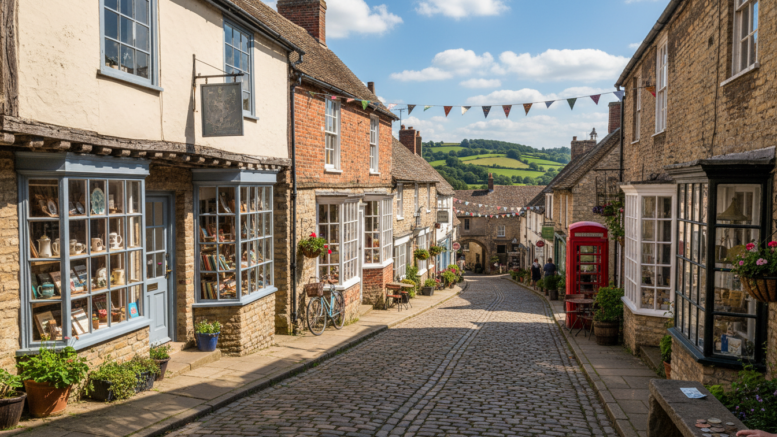
Somerset market town Frome has seen UK property values rise faster than anywhere else over the past decade, with prices climbing 59% despite Brexit, Covid and interest rate turbulence, according to new analysis from Clifton Private Finance.
The research, using Land Registry data from 2015 to 2025, found the typical home in Frome rose from £205,000 to £325,000 over the period. Growth between 2024 and 2025 was more modest at 1.9%, suggesting the surge may be levelling off.
Coastal and commuter towns dominate
The top ten towns for property value growth over the decade are:
- Frome, Somerset – 58.5%
- Lyme Regis, Dorset – 52.6%
- Stroud, Gloucestershire – 51.5%
- Lichfield, Staffordshire – 51.5%
- Whitby, North Yorkshire – 50.6%
- Rye, East Sussex – 50%
- Altrincham, Greater Manchester – 49.3%
- Wilmslow, Cheshire – 48.4%
- Salcombe, Devon – 47.3%
- Solihull, West Midlands – 46.8%
This follows Landlord Knowledge’s recent coverage of national house price trends, which showed prices holding steady while buy-to-let activity edges higher.
Regional hotspots for investors
The data reveals a mix of coastal lifestyle destinations and well-connected commuter towns. Lyme Regis, with typical homes now at £470,000, and Salcombe in Devon highlight coastal premium pricing, while Altrincham and Solihull reflect demand in commutable northern and midlands locations.
Transaction volumes have fallen across many of these towns, with Frome seeing sales drop from 659 properties in 2015 to 427 in 2025 – a pattern common in areas where prices have outpaced local wage growth.
What this means for landlords
- Capital growth vs yields: Strong price appreciation often correlates with compressed yields – landlords must balance growth potential against rental returns.
- Transaction slowdown: Lower sales volumes may signal affordability ceilings, potentially limiting future exit liquidity.
- Bottom line: Market towns with lifestyle appeal have outperformed cities, but late entry risks buying at the top of a decade-long cycle.
Editor’s view
Frome’s 59% growth sounds impressive until you factor in when most of it occurred. The 1.9% rise in the final year suggests the easy gains have been made. For investors considering market towns, the question is whether lifestyle migration continues post-pandemic or reverts to pre-2020 patterns. Betting on another decade like the last one may be optimistic.
Author: Editorial Team – UK landlord & buy-to-let news, policy, and finance
Published: 4 March 2026
Sources: Clifton Private Finance, Land Registry
Related reading: House prices hold steady as BTL activity edges higher