

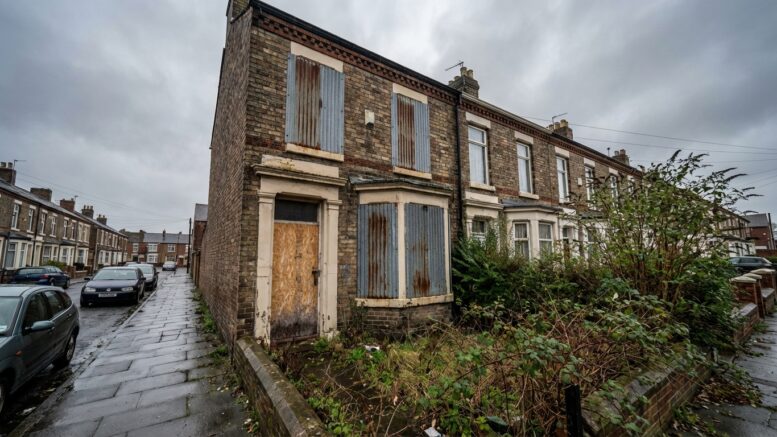
A cross-sector coalition has called on the government to develop a national strategy for bringing empty homes back into use, as the number of long-term vacant properties in England reaches an estimated 309,856 – a 13 percent rise on the previous year.
The Empty Homes Network, alongside The Big Issue, Women’s Aid, Shelter and social impact fund manager Resonance, has written an open letter to housing minister Matthew Pennycook urging action. The group argues each empty home represents a “missed opportunity” to provide settled housing, revitalise communities and make efficient use of existing housing stock.
Calls for funding and tax incentives
With local authorities facing unprecedented financial pressure from temporary accommodation costs, the coalition urges the government to look beyond new-build programmes and treat empty stock as a “vital national asset.”
Their proposals include a fully funded local authority duty to investigate and act on long-term empty home complaints, a national loan scheme and acquisition fund, and tax incentives such as reducing stamp duty for purchasers who use properties to provide social housing or pathways out of temporary accommodation.
Adam Cliff, secretary and policy lead at the Empty Homes Network, said: “With over 300,000 homes sitting stagnant while thousands of families remain trapped in unsuitable temporary accommodation, we are overlooking a ready-made solution to the housing crisis.”
“We’re asking the government to stop looking the other way and give local councils the funding and authority they need to turn these properties back into real homes for local people,” Cliff added.
Investment sector stands ready
Daniel Brewer, chief executive of Resonance, said bringing empty homes back into use offered a faster and more sustainable route than new-build alone.
“By implementing a national empty homes strategy, the government can create a pathway for social investment to flow into local communities, de-risking the refurbishment of empty stock and creating social housing at a fraction of the cost, and carbon footprint, of new builds,” Brewer said. “We have the capital and the expertise ready to go; we now need the policy framework to match.”
Government signals willingness to act
Last year, the government said it would strengthen the powers of local councils to take over management of vacant residential premises following a campaign by Westminster City Council. The central London authority called on ministers to make it easier to issue empty dwelling management orders to properties vacant for six months or more.
Scotland and Wales have already introduced action plans to tackle empty homes. The Scottish government funds the non-profit Scottish Empty Homes Partnership, run by Shelter Scotland, which helped return more than 2,000 empty homes to use in 2024-25.
Editor’s view
For landlords, 310,000 empty homes represent both a policy failure and an opportunity. Refurbishment projects can offer strong yields at lower entry costs than new-build, while councils increasingly offer incentives to bring void properties back into the market. If the government delivers on funding and streamlined compulsory purchase powers, early movers stand to benefit.
Author: Editorial Team – UK landlord & buy-to-let news, policy, and finance
Published: 23 February 2026
Sources: Empty Homes Network, Resonance, Ministry of Housing
Related reading: Lodger room supply drops as calls grow for tax threshold boost