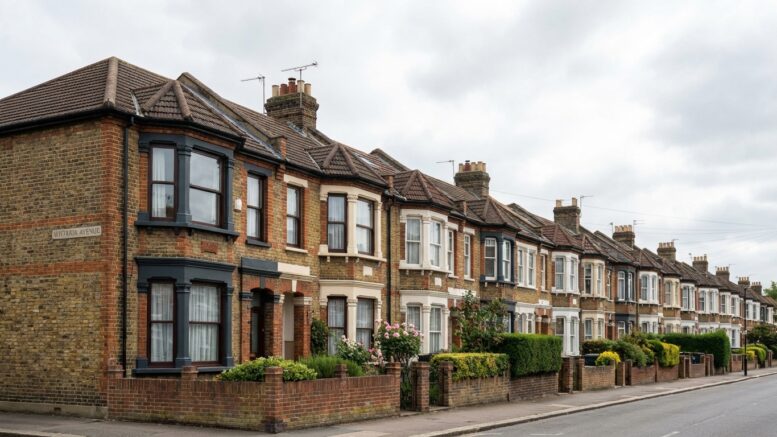
Rental properties make up just 32 percent of available housing stock across London – but in some outer boroughs the figure drops as low as 15 percent, according to new data highlighting a sharp supply imbalance facing tenants in suburban areas.
Analysis by estate agent Benham and Reeves found that of approximately 109,060 properties currently listed for sale or rent across the capital, only 35,324 are available to tenants. The shortage is most severe in outer London boroughs where landlords have historically been less active.
South and east boroughs hit hardest
Bromley has the greatest disparity, with 84.8 percent of current listings for sale and just 15.2 percent available to rent. Bexley follows with rentals accounting for only 17.3 percent of the market.
Other outer London boroughs showing severe shortages include Havering at 18 percent, Sutton at 18.8 percent, Enfield at 23.2 percent, Croydon at 24 percent, Greenwich at 24.5 percent and Lewisham at 25 percent.
This follows Landlord Knowledge’s reporting on central London lettings trends, which showed prime and super-prime rental demand surging. The contrast with outer boroughs points to a two-speed London rental market where supply problems are concentrated in areas most likely to house working families.
Central London shows rental surplus
The picture reverses in much of central London, where high-value rental stock has accumulated – in some cases creating oversupply.
Kensington and Chelsea has 49.1 percent of its listings available for rent, with Westminster at 47.4 percent. Camden follows at 44.1 percent, Islington at 40.2 percent and Tower Hamlets at 38.3 percent.
Marc von Grundherr, director at Benham and Reeves, said the data highlighted how localised London’s housing market has become. “The London market is rarely uniform and these figures highlight just how localised the balance has become,” he said.
“The lower rental stock levels mean that those properties that are available command strong rental values and yields for buy-to-let investors. Demand profiles shift significantly from one borough to the next, shaped by affordability, property type, transport links and local amenities.”
Von Grundherr added that for renters in some outer boroughs “the current imbalance does make the search more challenging”, while in prime central locations “the depth of rental stock reflects the needs of a more transient professional population”.
What this means for landlords
- If you own in outer London: Low supply means less competition and stronger tenant demand – rental values should hold even as other markets soften
- If you are considering purchases: Bromley, Bexley and Havering may offer opportunities where limited rental competition supports yields
- Watch for: Central London oversupply could pressure rents in prime areas, while outer boroughs remain supply-constrained
- Bottom line: The London rental market is increasingly two-tier – outer suburban landlords hold the advantage on supply
Editor’s view
The outer London supply squeeze makes sense when you consider landlord economics. Higher prices but similar rents in zones 1-2 push yields down, while Renters Rights Act concerns and stamp duty increases have accelerated exits from lower-value outer borough stock. For tenants, this creates a difficult reality: the boroughs most likely to offer family homes are exactly where rental options are hardest to find.
Author: Editorial Team – UK landlord & buy-to-let news, policy, and finance
Published: 9 March 2026
Sources: Benham and Reeves
Related reading: Super-prime London lettings surge 8% as wealthy tenants dodge tax hit