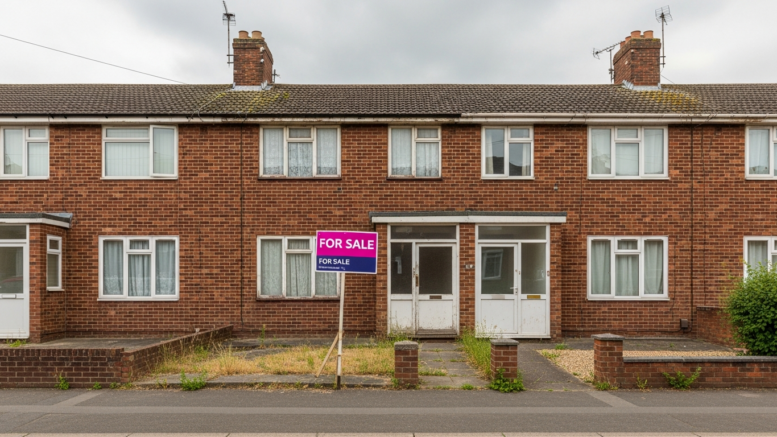
Landlord sales slowed in June even after the Renters’ Rights Act came into force, with Hamptons data suggesting the bulk of exits were driven by earlier tax and mortgage pressures rather than the Act alone. For landlords, the sharper issue now may be what happens when a sale fails.
Hamptons found that 9.2 percent of homes listed for sale in June had been advertised for rent in the previous five years, down from 11.3 percent a year earlier. That points to a cooler pace of landlord disposals than many in the sector feared before the May rules change.
The fresh risk comes from Ground 1A. A landlord who regains possession to sell can be blocked from re-letting for 12 months if the property does not sell, which turns an ordinary failed sale into a potentially expensive void.
Failed sales could trap stock outside the rental market
Hamptons said 51 percent of rental homes listed for sale last year failed to sell, rising to 60 percent for flats. Applied to the new regime, that would have left around 80,000 to 100,000 unsold rental homes unable to return to the lettings market for a year.
For landlords, that is the real commercial point. The decision to sell is no longer just about price or tax. It is also about whether there is enough confidence in the local sales market to justify taking a property out of rental use in the first place.
London and the South East look most exposed because prices are higher, yields are lower and buyer caution tends to bite harder. Hamptons said one in five London homes listed for sale in June had been rented in the previous five years, well above the national picture.
Regulation is colliding with a slower sales market
This follows Landlord Knowledge’s report on three in five homes remaining unsold since January, which highlighted how weak sales conditions can already leave vendors stuck for longer. It also lines up with Landlord Knowledge’s earlier warning on the Section 21 transition deadline, which showed how possession timing is now far more tightly linked to landlords’ wider exit planning.
That gives the story a stronger landlord angle than a simple exit narrative. If some owners postpone selling because the downside of failure has grown, rental supply may stay in place for longer than expected. But if they do go ahead and miss a buyer, the stock can still be removed from the market for months.
Hamptons also said many landlords who wanted to quit had probably already done so before the Act took effect, after years of tax changes and higher borrowing costs. That is a useful corrective to the idea that May 2026 alone triggered a fresh exodus.
Landlords can review Hamptons’ rental index source page here.
What this means for landlords
- If you’re planning a sale: test buyer demand properly before serving notice under Ground 1A.
- Watch for: flats and southern markets where failed sales and longer marketing periods make the 12-month ban more dangerous.
- Bottom line: the Act may not be driving a new mass sell-off, but it has made a bad sale outcome much more costly.
Editor’s view
The headline is not a dramatic landlord exodus. It is a change in risk. Ground 1A gives landlords a route out, but in a weak sales market it can also leave them holding an empty property they cannot quickly put back to work.
Author: Editorial Team – UK landlord & buy-to-let news, policy, and finance
Published: 13 July 2026
Sources: Hamptons, Connells Group
Related reading: Section 21 court deadline leaves landlords six weeks
📘 Renters’ Rights Act: Complete Landlord Guide
Everything you need to know about the new rules – 1 May 2026