

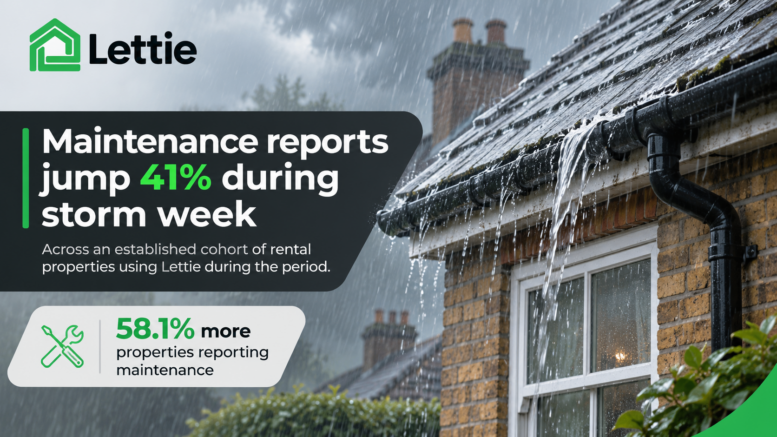
Rental maintenance cases rose by 40.8 percent during the week of 21 to 27 October, compared with the average weekly level across the previous four weeks, new analysis from property maintenance platform Lettie has found.
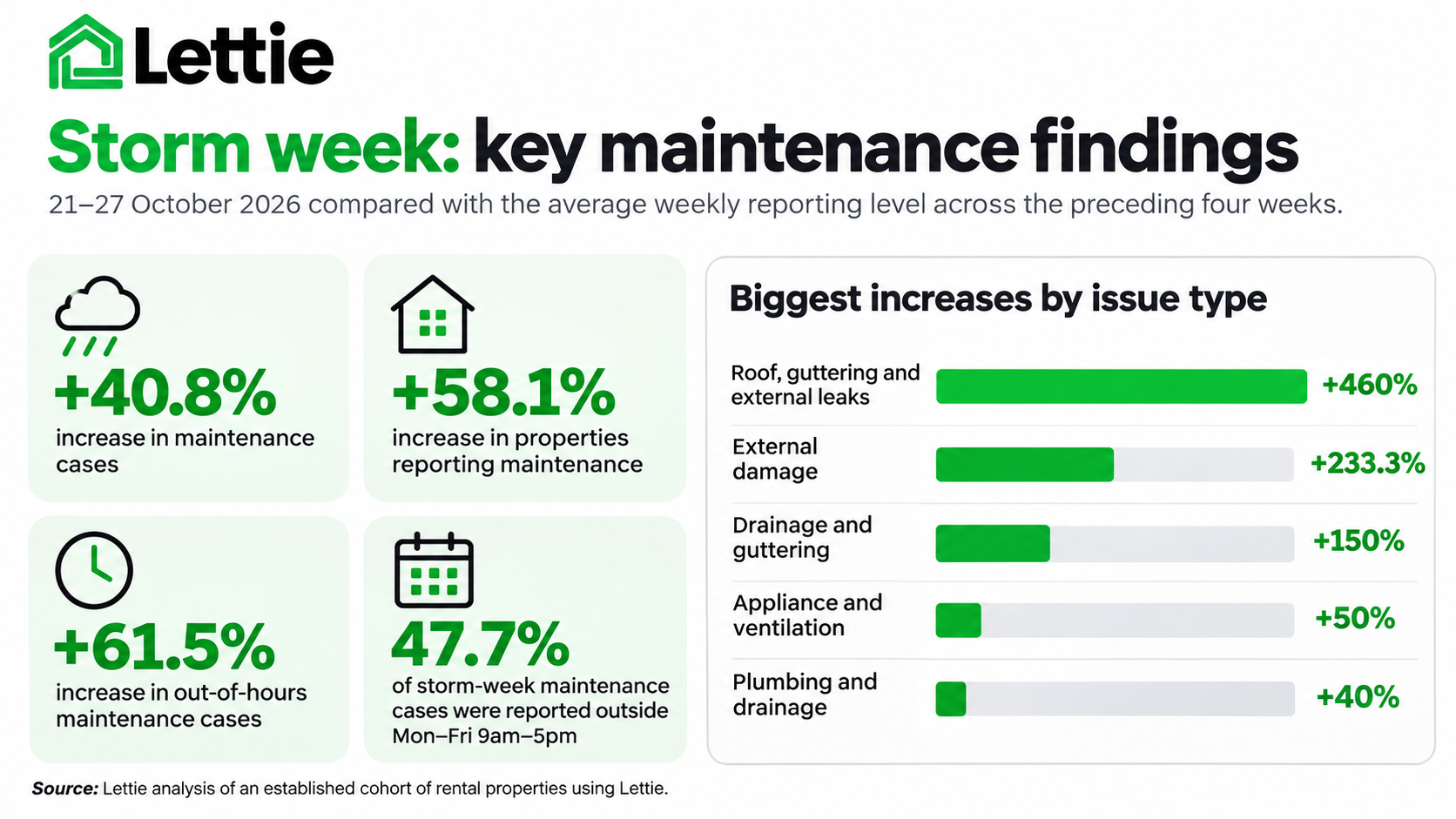
The number of individual rental properties reporting a problem rose even faster, up 58.1 percent on the same four-week baseline. Roof, guttering and external leak reports increased by 460 percent, while external damage reports rose by 233.3 percent.
Portfolio teams felt the late-October weather as an out-of-hours resourcing test, with almost half of storm-week cases landing outside normal office time and a sharp concentration of roof and drainage faults. The pattern points to early winter pressure on response times, triage and contractor cover rather than a steady rise in routine jobs.
Lettie used the same established property cohort throughout, stripping out new properties, demo accounts and admin records so growth was not counted as demand.
Roof and guttering faults lead storm surge
Drainage and guttering reports increased by 150 percent, appliance and ventilation reports rose by 50 percent and plumbing and drainage reports increased by 40 percent. Tenant accounts in the period included fences damaged by wind, rain entering around windows, roof leaks and guttering leaking during heavy rain.
Categories were assessed from tenant descriptions and stored summaries. Lettie said categories can overlap and the largest moves sit on smaller case counts, so those need more care than the headline rise.
As a cross-check, storm-week reporting was 63 percent above the week before and above each week in the comparison period. Message volume rose by only 3.1 percent, which points to more faults rather than more chasing on the same fault.
Connor Hawkins, co-founder and chief solutions officer at Lettie, said the split between messages and cases was central to the finding. “The interesting thing for landlords and agents is not simply that maintenance reporting increased, but where that increase appeared and when tenants were reporting it,” he said.
“We saw a particularly sharp rise in roof, guttering, drainage and external problems, alongside a 61.5 percent increase in maintenance cases being reported outside traditional office hours,” he said. “When weather conditions deteriorate, property managers can find themselves dealing with a sudden concentration of problems at exactly the time when their teams may be least available.”
This follows Landlord Knowledge’s report on Lettie hot-water data in September, which found 73.7 percent of hot-water reports arrived outside office hours. The latest figures show a similar timing strain but across a much wider set of fabric and external faults, which puts more weight on having cover and clear escalation routes in place.
Out-of-hours reports climb to almost half
Out-of-hours cases increased by 61.5 percent against the previous four-week weekly average. Cases first reported outside Monday to Friday, 9am to 5pm accounted for 47.7 percent of all maintenance reporting in the storm week, up from 41.6 percent in the preceding period.
Hawkins said grouping was used to stop repeat contact inflating the result. “That distinction is important. We were not simply seeing tenants sending 40 percent more messages,” he said. “The increase remained when reports relating to the same underlying problem were grouped together, and considerably more individual properties were reporting maintenance issues too.”
Lettie also pointed to the value of structured triage to prioritise repair requests when volumes spike. Some conversations suggested older defects had resurfaced in heavy rain, including water ingress and repeat leaks.
“For agents managing hundreds or thousands of homes, that kind of sudden shift can create a significant operational challenge,” Hawkins said. “Periods of severe weather do not necessarily generate a steady increase in workload – they can create a surge of different problems across a portfolio in a very short period.”
Full detail is available from Lettie.
What this means for landlords
- If you hold houses with older roofs or gutters: arrange a visual check of roof coverings, gutter joints and downpipes now, and log any past leak so a repeat report can be spotted fast.
- Watch for: out-of-hours cover through late autumn and winter, with clear guidance for tenants on what counts as urgent and how to report it.
- Bottom line: a short spell of bad weather can lift fault volumes by more than 40 percent in a week, so diary capacity and contractor contacts need headroom built in.
Editor’s view
Storm data often gets filed as weather chat, but this one is about capacity. Roof and gutter faults arriving at night and at weekends are exactly the jobs that breach timescales if triage is thin. Landlords who fix the reporting route before winter will spend less than those who pay for catch-up call-outs later.
Author: Editorial Team – UK landlord & buy-to-let news, policy, and finance
Published: 03 November 2026
Sources: Lettie
Related reading: Lettie: 73.7% of hot-water reports arrive out of hours