

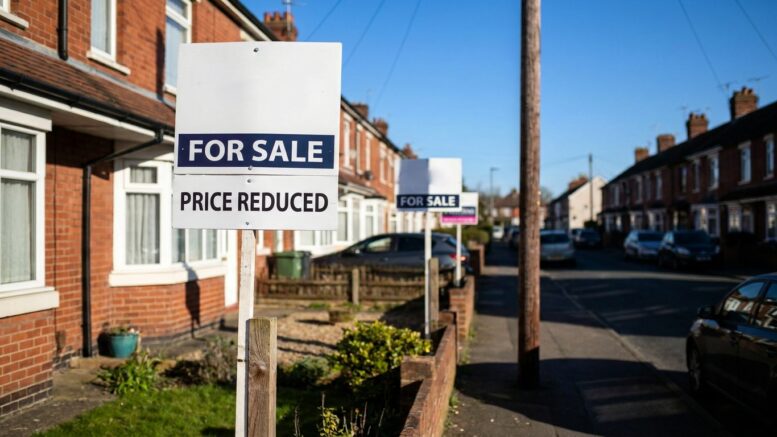
More than a third of UK homes now sit in postcode areas where house prices are falling, after Zoopla’s latest House Price Index showed price weakness spreading from 12 percent of homes a year ago to 35 percent today.
Sales agreed over the last four weeks ran 7 percent below last year while the stock of homes for sale stood 7 percent higher, giving buyers wider choice and stronger room to haggle over price. Homes that attract a buyer still sell as quickly as a year ago, changing hands in 44 days on average, which points to selective demand rather than a frozen market.
For investors the split cuts two ways. Landlords buying in southern England face less competition and more realistic vendors, while landlords selling need to price keenly from day one or risk being left on the shelf. Zoopla adds that Wednesday’s Budget could trim moving costs, with an extended two percent stamp duty band to £500,000 saving movers up to £7,500.
London and the South East lead the price falls
The national average of £273,100, up 0.8 percent on the year, hides sharp regional splits. London values fell 1 percent, leaving the average home £5,400 cheaper than a year ago, while the North West rose 3.2 percent, adding £6,600 to the average home.
Local detail shows 85 percent of homes in London and the South East sitting in postcode areas with falling prices, alongside three quarters in the Eastern region and 42 percent in the South West. The steepest drops sit in WC London at 5.7 percent and North West London at 2.2 percent, with coastal markets including Bournemouth, Truro and Torquay also down. Prices keep rising across cheaper regions, with Liverpool, Carlisle and Kilmarnock postcode areas up by more than 4 percent. The pattern echoes Zoopla’s earlier finding that just over half of family homes stay within reach of an average income, with affordability strongest away from the south.
Nathan Emerson, chief executive of Propertymark, said the market is becoming increasingly localised, with higher mortgage costs squeezing affordability in southern England. “While increased choice is giving buyers greater scope to negotiate, realistic pricing and informed advice from property professionals remain essential to achieving successful sales,” he said. “Ultimately, market confidence will depend on improved affordability, access to suitable housing and the ability of buyers and sellers to move with confidence.”
Realistic pricing decides who sells
Zoopla’s study of listings from April to June 2026 found 41 percent of homes listed at least 5 percent below their estimated value found a buyer within 90 days, against 26 percent of those pitched 20 percent or more above it. Cutting the price later rarely rescues a sale: 19 percent of reduced homes sold within 90 days, compared with 41 percent that held their original asking price.
Richard Donnell, executive director at Zoopla, said well priced and well presented homes are selling as fast as last year. “Getting the price right from the start is essential. Overpricing significantly reduces the chances of selling, so sellers should seek advice from local agents on buyer demand and the right asking price for their home,” he said.
Zoopla also used the report to press the Chancellor ahead of Wednesday’s Budget. Extending the two percent stamp duty band to £500,000 would save movers up to £7,500 and first time buyers up to £6,000 under similar reforms, while the proposed Your First Home scheme could back around 30,000 purchases a year, or one in ten first time buyer sales. Full detail sits in Zoopla’s latest House Price Index, with response in the latest Propertymark analysis.
This follows Landlord Knowledge’s report on slowing Land Registry price growth in August, which put annual growth at 0.9 percent. The Zoopla figures confirm the slowdown is now biting hardest in high-cost southern markets while cheaper regions keep climbing.
What this means for landlords
- If you are buying in the south: wider stock and softer asking prices favour decisive offers, particularly on homes already sitting unsold.
- If you are selling: price to the new evidence from day one, since a later cut sells less often than a keen launch price.
- Watch for: Wednesday’s Budget and any stamp duty shift, which would lower transaction costs most where prices are highest.
- Bottom line: a buyer’s market in the south rewards realistic pricing on both sides of the deal.
Editor’s view
Soft prices across a third of postcodes read less as a crash signal than a sorting process. Sellers who follow the local data will still move stock, and landlords with finance ready can pick through southern markets that were shut to them two years ago. The Budget now decides whether that window stays open.
Author: Editorial Team – UK landlord & buy-to-let news, policy, and finance
Published: 27 October 2026
Sources: Zoopla House Price Index, Propertymark
Related reading: Land Registry: house price growth slows to 0.9 percent in August