

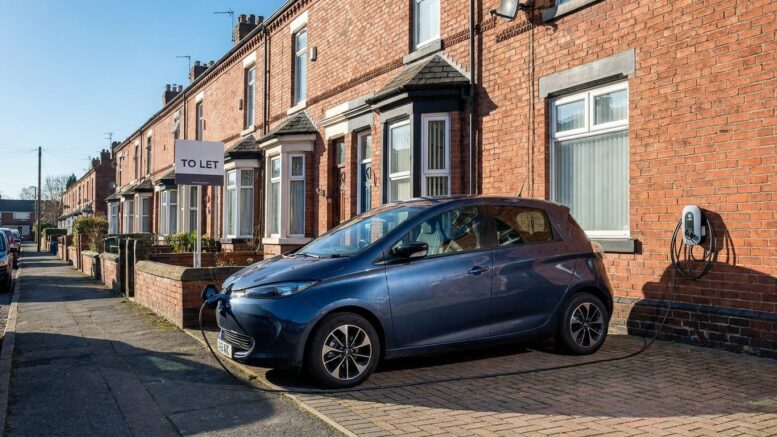
Ministers have opened a consultation on giving tenants and leaseholders in England a clearer legal route to install an electric vehicle charge point, with responses due by 16 December 2026.
The Department for Transport and the Ministry of Housing, Communities and Local Government are weighing voluntary guidance or new legislation under an “ability to charge” plan. If laws go ahead, landlords and freeholders would face a fixed deadline to reply and would need to give reasons for any refusal.
Landlords who provide off-street parking now face a more formal request process. Charge point decisions would move from informal consent to a timed system with written records, cost agreements and clear rules on removal when tenancies end.
What ministers propose for rented homes
The consultation covers homes with off-street parking, including rented, leasehold and shared ownership properties in England. It seeks views on demised and allocated bays, with a separate question on communal parking areas.
Officials say residents would normally arrange and pay for the installation, including any alteration permission fee. Ministers are also asking who should carry maintenance, insurance and removal costs, and how disputes should be escalated.
This follows Landlord Knowledge’s report on £500 grants for charge point installs, which found landlords and tenants can still claim support until 31 March 2027. The new consultation looks beyond funding to the permission process itself.
Permissions, parking and costs
Propertymark, which covered the proposals for letting agents, said parking provision and permission to install should be treated as separate questions. An allocated space alone should not be presented as proof a charger can be fitted.
Agents are urged to keep a clear record of each application, any onward referral to a freeholder or manager, and the final decision. Before works start, the parties should sign a written agreement on access for installers, electrical checks, payment and what happens at the end of the tenancy.
The grant scheme offers up to £500 per property through the official EV charging consultation page for eligible landlords and tenants with private off-street parking, subject to the published rules.
When a landlord could still refuse
Suggested refusal grounds include conflicts with lease terms or statutory duties, network capacity limits, lack of suitable off-street parking, a building-wide charging plan, or failure to meet electrical standards.
For block managers, ministers say individual bids should be weighed against whole-building capacity and fair access to shared infrastructure. A coordinated plan may carry more weight than piecemeal approvals.
What this means for landlords
- If you let with off-street parking: log every charger request in writing and track referral times now, before any deadline becomes law.
- Use a written agreement: set out who pays for install, maintenance, electricity use and removal, and whether the unit stays at void.
- Check leases and capacity: confirm alteration clauses, parking rights and supply headroom with your electrician before you reply.
- Watch the grant window: £500 support runs to 31 March 2027, so eligible jobs booked early can cut net cost.
- Bottom line: a refusal will need evidence and a paper trail, so prepare a standard response pack for charge point requests.
Editor’s view
Charger requests have been messy because permission, parking rights and wiring checks sit with different people. A fixed reply clock would force tidier files. Landlords who set a simple request form and a standard licence for works will handle this with little friction.
Author: Editorial Team – UK landlord & buy-to-let news, policy, and finance
Published: 23 October 2026
Sources: UK Government, Propertymark
Related reading: Landlords can claim £500 grants to install EV chargers