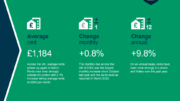
Average UK rents reached £1,387 a month in September, a fresh record in the HomeLet Rental Index, up 0.4 percent on August and 3.3 percent higher than a year ago.
London drove almost all of the monthly rise, climbing 1.5 percent to £2,272. Strip out the capital and average rents across the rest of the UK slipped 0.3 percent to £1,176, though they remain 3.1 percent up on last September. Only four of the 12 regions monitored recorded any monthly growth.
A headline record built on London, Northern Ireland and pockets of the South West gives landlords in most regions little cover for pushing asking rents higher. With eight regions falling month on month, pricing against local achieved rents – not the national average – is what will keep voids short this autumn.
London and Belfast power the national figure
Northern Ireland saw the largest monthly increase at 2.2 percent, followed by London at 1.5 percent and Yorkshire and the Humber at 1 percent, with the South West up 0.8 percent. On an annual basis, Northern Ireland and the South West both stand 5.4 percent higher, with Scotland up 4.9 percent. Wales was the only region to record an annual fall, down 0.4 percent.
London rents now sit 3.3 percent above last year at £2,272, while the South East averages £1,472 and the East of England £1,340. The West Midlands and South East saw the weakest annual growth, both below 2 percent.
This follows Landlord Knowledge’s August report that new-tenancy rents hit £1,382, when the index first touched record territory. September’s extra £5 confirms the market has not rolled over – but the regional split beneath it is now far sharper than the headline suggests.
Affordability strain keeps referencing in focus
HomeLet’s figures show tenants now spend an average of 32.1 percent of income on rent, rising to 40 percent in Northern Ireland and 38 percent in Greater London. Jo Dickens, head of business development at HomeLet, questioned whether pay is keeping pace. “Rents have hit another record high, but are tenants’ incomes really keeping up?” she said.
Dickens said slower local rent growth does not mean homes are getting easier to afford, and argued referencing must look beyond salary to credit commitments and bills. That message chimes with HomeLet’s finding that over-70 renters spend 46.8 percent of income on rent – affordability pressure now reaches well beyond younger sharers.
The full regional breakdown is published in the HomeLet Rental Index.
What this means for landlords
- If you let in London, Northern Ireland or the South West: annual growth above 5 percent supports firm renewals, but document comparable achieved rents before raising anything.
- If you let where rents fell monthly: eight regions slipped, so over-ambitious re-lets risk extended voids – price to local demand, not the £1,387 headline.
- Tighten referencing: with tenants spending nearly a third of income on rent, full affordability checks covering credit and bills cut arrears risk.
- Watch renewal timing: tenants facing record rents shop harder at renewal – early, realistic offers retain better than late, steep ones.
- Bottom line: the market still favours landlords overall at 3.3 percent annual growth, but the gains are concentrated – local data decides each letting.
Editor’s view
Another record, another reminder that national averages hide the real market. Landlords who read the regional table will price sharper and let faster than those who quote the headline. In eight falling regions, restraint now beats regret later.
Author: Editorial Team – UK landlord & buy-to-let news, policy, and finance
Published: 14 October 2026
Sources: HomeLet Rental Index
Related reading: HomeLet: UK new-tenancy rents hit £1,382 in August