

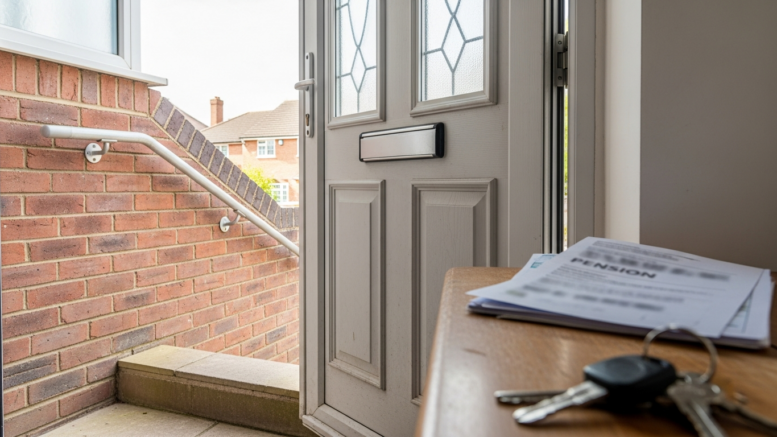
One in three pensioner households could be renting by 2044, according to new ABI-backed research that projects 1.3 million more retired renters over the next two decades. For landlords, the shift points to a tenant base that is likely to stay in the private rented sector for longer and bring different affordability and property-standard pressures with it.
The warning matters because the numbers cut against the old assumption that most renters eventually age out of the sector. The research says only 65 percent of households aged 45 to 65 are owner-occupiers today, around 15 percentage points lower than 20 years ago, which means many more households are heading toward retirement with rent still to pay.
For landlords, that raises practical questions now. An older tenant base can mean longer tenancies and lower churn, but it also sharpens scrutiny around affordability, accessibility, heating costs and the suitability of older stock.
Pension income could be swallowed by rent
The Association of British Insurers said privately renting a two-bedroom home through retirement can cost between £200,000 and £400,000. That compares with an average defined contribution pension pot of £154,000, falling to £105,000 for women. In simple terms, rent alone could wipe out a large share of private pension savings before other living costs are covered.
Dr Priya Khambhaita, head of research at the Pensions Policy Institute, said the projection posed a serious challenge for retirement adequacy, with housing costs increasingly eating into later-life pension income. That matters to landlords because affordability risk in later life is not just a tenant issue – it feeds directly into arrears risk, void risk and pressure for policy intervention.
That pressure is unlikely to land evenly. Landlords with well-insulated, lower-maintenance homes in areas with good transport and health access may see stronger demand from older renters. By contrast, older stock with stairs, poor EPC ratings or high running costs may become harder to let to this part of the market without upgrades.
Landlords may need to think beyond standard tenant demand
This follows Landlord Knowledge’s report on falling room supply and record highs in six regions, which showed affordability pressure is still reshaping who rents and for how long. It also sits alongside Landlord Knowledge’s coverage of slower rent inflation and rebounding house prices, a reminder that headline rent growth alone does not settle the affordability question.
There is a clear warning here for landlords who still see the private rented sector mainly as a short-to-mid-life tenure. If more retired households stay in rented housing, demand may hold up, but so will political pressure around housing benefit, pension adequacy and property conditions. That could make the quality and running cost of a rental home more commercially important than headline rent growth alone.
Recent market data has already shown that affordability remains a live issue even where rents are no longer accelerating at their previous pace. Landlords who can offer homes that are cheaper to heat, easier to navigate and suitable for longer stays may be better placed than those relying on frequent turnover or marginal stock.
Readers can see the ABI summary of the findings here.
What this means for landlords
- If you hold older stock: review accessibility, heating efficiency and repair exposure before later-life demand becomes a bigger factor.
- Watch for: more policy pressure around pension adequacy, housing support and standards in homes let to older tenants.
- Bottom line: an ageing renter base could support demand, but only landlords with suitable stock are likely to benefit fully.
Editor’s view
More retired renters should not be read as an easy demand story. It is a sign that housing costs, pension savings and home ownership are drifting further apart. Landlords may get longer demand tails from this, but the trade-off is sharper scrutiny on affordability and standards.
Author: Editorial Team – UK landlord & buy-to-let news, policy, and finance
Published: 13 July 2026
Sources: Association of British Insurers, Pensions Policy Institute
Related reading: Private renters paying more than mortgage holders, data shows