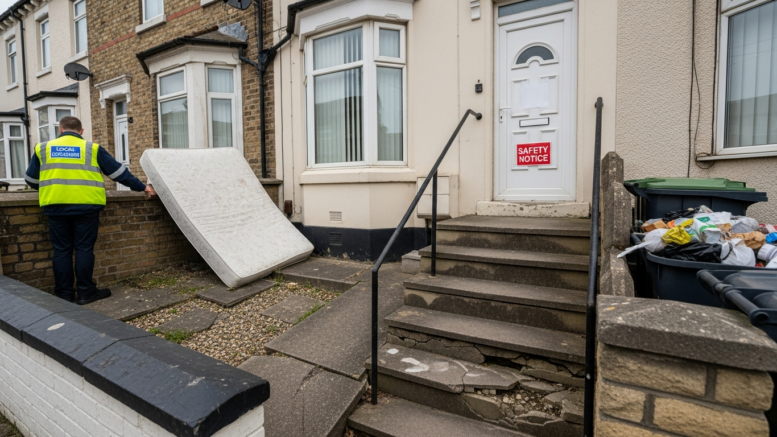
A Lincoln landlord has been fined £4,000 after the council found seven breaches of HMO management rules at a property where fire safety failures, electrical risks, damp and disrepair left tenants exposed to serious harm.
City of Lincoln Council said the case began after tenant complaints and a visit by Lincolnshire Fire and Rescue in January 2025 identified immediate fire safety risks. The prosecution result, confirmed after a 12 June sentencing hearing, adds another example of councils using existing powers rather than waiting for further rental reform measures.
For landlords, the warning is current and practical. The case shows how quickly an HMO complaint can escalate when poor management overlaps with fire safety and repair failures, especially now that councils are under heavier pressure to show visible enforcement in the private rented sector.
Seven breaches led to prosecution
The landlord, Anita Sharma, pleaded guilty to seven offences under the Management of Houses in Multiple Occupation (England) Regulations 2006. Lincoln Magistrates’ Court also ordered £2,000 in council costs and an £800 surcharge.
The council said its Housing Standards and Enforcement Team found multiple serious hazards after inspecting the property, and served an Emergency Prohibition Order because of the imminent risk of serious harm to occupants. In a related matter, a second individual acting on behalf of the landlord accepted a simple caution under the Protection from Eviction Act 1977.
This follows Landlord Knowledge’s recent report on Coventry raids targeting suspected unlicensed HMOs, which showed councils stepping up visible enforcement activity. The Lincoln case adds a prosecution outcome and a reminder that inspection failures can turn into court action even without the biggest headline fine.
Why smaller fines still matter
A £4,000 fine is modest beside some recent six-figure enforcement headlines, but that should not mislead landlords. Once costs, surcharge, void losses, works, legal advice and reputational damage are added, the true bill can be far higher than the headline number.
The case is also a warning for landlords who treat damp or disrepair as separate from HMO compliance. In practice, councils often view these issues together, particularly where basic management failings are already visible.
Landlords with shared houses should review escape routes, electrical safety records, repairs reporting and inspection routines now. City of Lincoln Council’s prosecution statement shows how a complaint-led case can grow into a multi-breach enforcement action. Landlords can also compare it with Landlord Knowledge’s recent Bristol rent repayment case, where the financial damage of HMO non-compliance ran much higher.
What this means for landlords
- If you run HMOs: check management regulations, fire precautions, repair logs and inspection records together rather than as separate tasks.
- Watch for: complaint-led inspections that widen from one issue into a full compliance review.
- Do next: revisit any property where damp, electrics or fire safety concerns have been raised more than once.
- Budget for: quick remedial works on shared houses, because delay can cost more than the repair itself.
- Bottom line: smaller prosecution fines still signal serious council scrutiny and can trigger a much bigger overall loss.
Editor’s view
The headline fine here is not the real lesson. The real lesson is that routine neglect in an HMO can stack up into several offences at once, and councils do not need new powers to make that expensive.
Author: Editorial Team – UK landlord & buy-to-let news, policy, and finance
Published: 06 July 2026
Sources: City of Lincoln Council
Related reading: Coventry raids uncover suspected unlicensed HMOs