

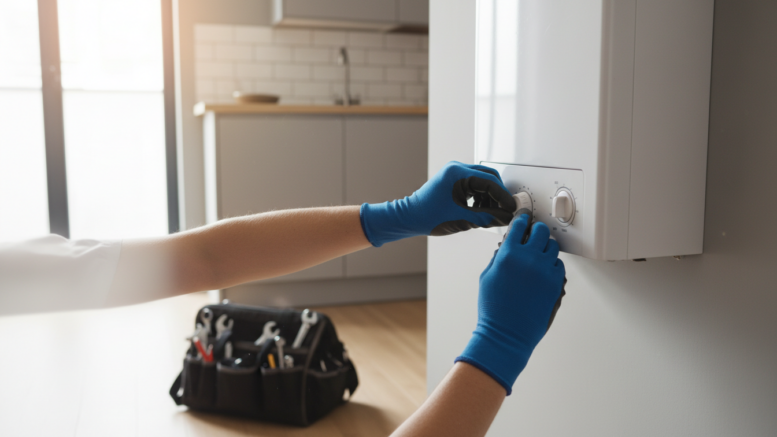
Repair responsibilities depend on where the property is. This guide gives the detailed legal position for private rented homes in England, then flags the different statutory regimes in Wales, Scotland and Northern Ireland. The Renters’ Rights Act has changed parts of the England private rented sector, but its future Awaab’s Law and Decent Homes measures are not current private-rented-sector repair deadlines.
Current repair duties in England
For most short residential lets, section 11 of the Landlord and Tenant Act 1985 implies a duty to keep the structure and exterior in repair. That includes drains, gutters and external pipes. It also covers installations for water, gas, electricity and sanitation, and installations for space heating and hot water.
The duty cannot generally be shifted to the tenant by a tenancy term. The statute does not, however, make a landlord responsible for damage a tenant is liable for through failing to use the home in a tenant-like manner, or for items the tenant is entitled to remove. In a flat, the duty can extend to relevant common parts and shared installations that serve the dwelling.
England also has a separate implied fitness duty. The Homes (Fitness for Human Habitation) Act 2018 requires covered homes to be fit when the tenancy starts and to remain fit during it. Serious hazards, including damp and mould where they make a home unfit, need careful assessment rather than being dismissed as a cosmetic issue.
For the council hazard-assessment and enforcement framework, see the HHSRS guide for landlords.
What the tenant is responsible for
A landlord should not ask a tenant to carry out repairs that remain the landlord’s responsibility. Equally, a tenant can be responsible for putting right damage caused by them, their household or visitors. GOV.UK also advises tenants to carry out repairs themselves only where the tenancy agreement permits it. A clear record of the defect, cause, access arrangements and completed work helps both parties deal with disagreements fairly.
Repair reporting and a sensible response process
Give tenants a simple written route for reporting repairs and ask for the date, location, a short description, photographs where useful, and any immediate health or safety concern. A report of a leak, loss of heating or hot water, exposed electrical wiring, gas concern, serious damp or mould should be assessed promptly and escalated according to the risk. The GOV.UK repairs guidance lists the main items a landlord is responsible for and directs tenants to their local council where a problem could harm health or cause a nuisance.
For a focused England response to reports of damp and mould, see the Damp and mould landlord responsibilities guide.
Keep a dated record of the report, acknowledgement, inspection, contractor instruction, access attempts, updates and completion. Explain what will happen next and when. Routine inspections can help identify issues, but they do not replace a reliable reporting route. Where entry is needed, arrange it lawfully and with appropriate notice, except where an emergency makes immediate action necessary.
Renters’ Rights Act, Awaab’s Law and Decent Homes
The first phase of the Renters’ Rights Act took effect on 1 May 2026 and included tenancy, possession, rent-increase and enforcement changes in England. It did not introduce private-rented-sector Awaab’s Law repair timescales or a private-rented-sector Decent Homes Standard.
The government’s implementation roadmap places Awaab’s Law and the Decent Homes Standard in Phase 3. It says the policy details and implementation timescales are subject to consultation. Landlords should therefore continue to deal with serious hazards quickly, but should not present the social-housing Awaab’s Law timetable, or an unconfirmed 14-day, 7-day or 24-hour timetable, as a current PRS legal deadline.
Wales, Scotland and Northern Ireland
Wales: Wales uses occupation contracts, not the England tenancy framework. Under sections 91 and 92 of the Renting Homes (Wales) Act 2016, covered landlords must keep the dwelling fit for human habitation and keep its structure, exterior and service installations in repair. Check the Welsh framework before relying on an England process or remedy.
Scotland: Scottish private landlords must meet the Repairing Standard and the Tolerable Standard, including requirements affecting the home and relevant communal areas. Scotland has its own tribunal route; see the Scottish Government repairs and maintenance guidance.
Northern Ireland: Northern Ireland has separate housing standards and procedures. Do not treat the England, Wales or Scotland rules above as a substitute for the current Northern Ireland position. GOV.UK directs readers to nidirect’s housing-standards guidance for that regime.
Making compliance easier
Clear reporting, risk-based triage, documented contractor instructions and consistent updates make repair management easier to evidence. Services such as AskLettie offer maintenance triage for repair reports, but a tool’s classification should support rather than replace a landlord’s judgement, contractor advice and the legal duties that apply to the property.
For the wider England compliance picture, see the Landlord regulation guide. This page is general information, not advice on a particular defect, tenancy or enforcement case.
Last updated: 7 September 2026