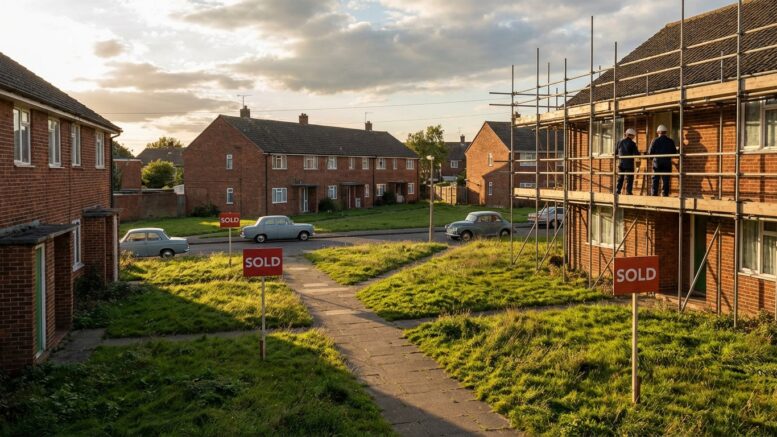
Right to Buy applications surged to a 20-year high in 2024-25, with councils recording a net loss of nearly 4,000 social homes – a trend that will push more tenants into the private rented sector.
Ministry of Housing, Communities and Local Government data shows 63,068 Right to Buy applications were submitted in the 12 months to March 2025, an increase of 236 percent compared with the previous year. The spike followed the government’s decision to slash maximum discounts from £102,400 to between £16,000 and £38,000 in November 2024, with tenants rushing to apply before the changes took effect.
Social housing stock continues to shrink
The same MHCLG release reveals that social housing supply remains in negative territory. In 2024-25, England recorded a net loss of 3,834 homes for social rent, with 16,291 properties either sold or demolished against just 10,807 built.
This follows similar patterns in previous years: a net loss of 1,687 homes in 2023-24 and 4,055 in 2022-23. Since Margaret Thatcher introduced the scheme in 1980, more than two million homes have been lost from the public sector – a structural shift that continues to redirect housing demand toward private landlords.
For landlords already facing rising tenant demand and declining supply, the trend adds further pressure. Research from RICS shows landlord instructions falling while tenant demand climbs, creating a rental market where properties let quickly and rents continue to rise.
Government defends discount cuts as necessary reform
The MHCLG notes that only 40 to 50 percent of Right to Buy applications typically result in sales, and expects a lower conversion rate from the recent surge due to speculative applications. The full impact of the new discount structure will not be visible until the 2025-26 reporting period.
Will Jeffwitz, head of policy at the National Housing Federation, said the figures “powerfully illustrate why the action being taken by the government to drive a generational increase in homes for social rent is so important.”
The government has committed £39 billion to its new Social and Affordable Homes Programme, which it describes as the biggest boost to social housing in a generation. However, charities argue the pace of delivery remains far short of what is needed.
Matt Downie, chief executive of Crisis, said the government was “on course to fail unless urgent action is taken.” He added: “The best evidence shows we need 90,000 social homes delivered a year to turn the tide on rising homelessness – but we’re a far cry from that.”
PRS implications as landlord exodus continues
The shrinking social housing stock has direct consequences for buy-to-let investors. With an estimated 110,000 landlords expected to exit the market in 2026, the combination of reduced social and private rental supply creates conditions for sustained rent growth.
A MHCLG spokesperson said: “For too long, social homes have been sold off without being replaced – that is why we have already acted to reduce Right to Buy discounts and ensure money from sales is reinvested in new social homes.”
The government estimates that its Right to Buy reforms will reduce sales by around 25,000 over five years, keeping those properties within the social rented sector. Whether this proves sufficient to offset decades of stock depletion remains to be seen.
Editor’s view
The numbers are unambiguous: social housing is shrinking faster than it can be replaced, and the private rented sector will absorb the displaced demand. For landlords weighing their options ahead of the Renters’ Rights Act, this structural supply shortage provides some reassurance that tenant demand will remain strong – even if the regulatory environment grows more challenging.
Author: Editorial Team – UK landlord & buy-to-let news, policy, and finance
Published: 13 February 2026
Sources: MHCLG, National Housing Federation, Crisis
Related reading: RICS: rents set to rise as landlord supply falls further