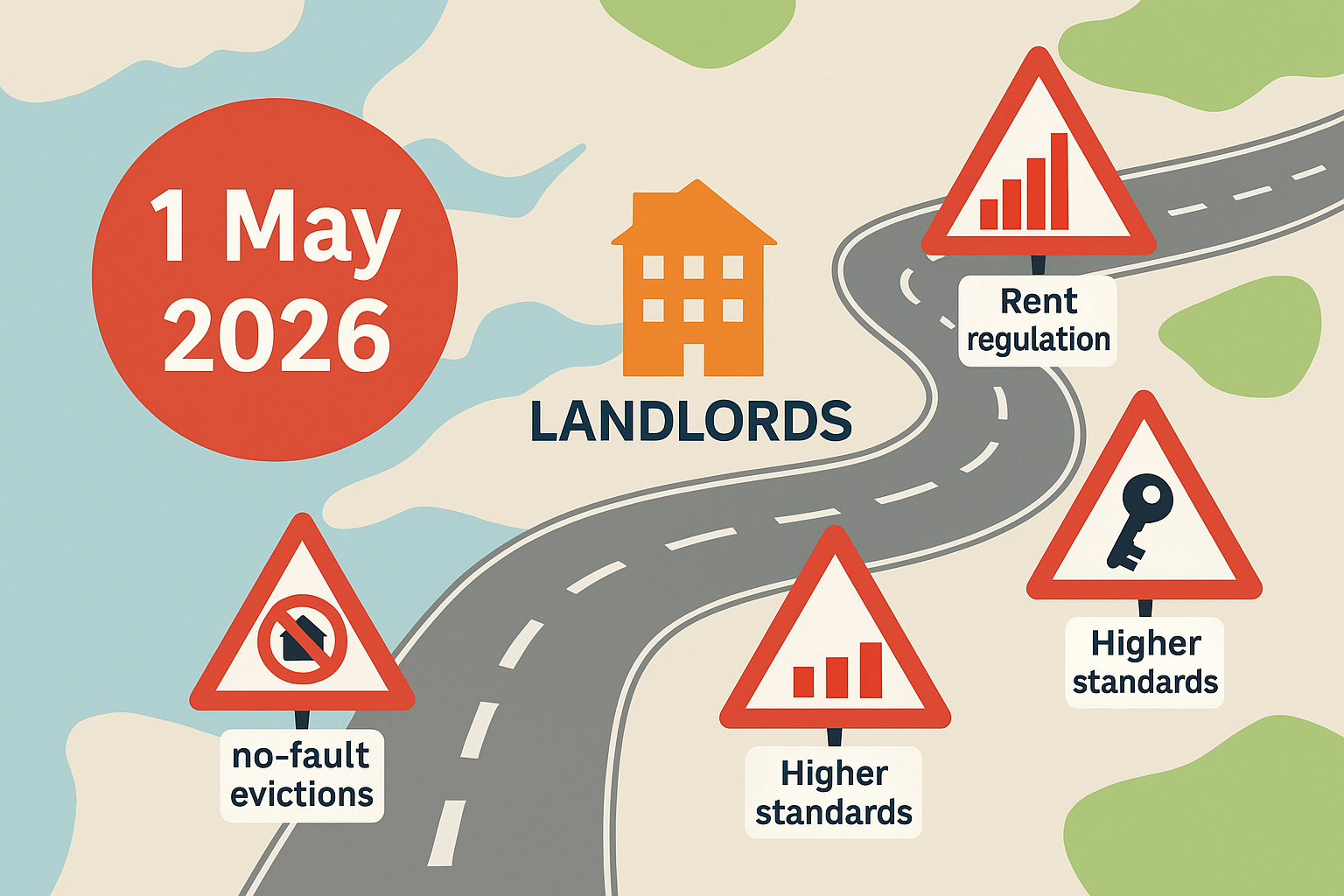
Private landlord possession claims rose 11.1 percent in the first quarter of 2026, with 7,629 cases issued in England and Wales before the Renters’ Rights Act ended Section 21 on 1 May, according to Ministry of Justice data analysed by LegalforLandlords.
The fresh point in the figures is not the annual comparison, which still shows overall landlord claims lower than a year earlier, but the late pre-deadline shift within the private rented sector. Total landlord claims reached 22,733 in January to March, up 5.9 percent on the final quarter of 2025, while accelerated claims across all landlord types rose to 6,599 after falling in the previous quarter.
For landlords, that matters now because the next official release will be the first to show how possession behaviour changed once Section 21 had gone. The Q1 spike suggests some owners were not prepared to wait for the new regime and moved before the legal route changed.
Private landlords moved before the 1 May switch
The Ministry of Justice said its January to March 2026 possession statistics do not yet capture the impact of the Renters’ Rights Act itself, because the key changes only came into force at the start of May. Even so, the quarter now looks like a final burst of pre-change activity.
LegalforLandlords said landlords appeared to bring forward cases while Section 21 was still available. Sim Sekhon, group chief executive of LegalforLandlords, said the timing was highly significant and showed many landlords chose to act before the possession process changed permanently.
That interpretation fits the quarter-on-quarter pattern better than the headline annual fall. Ministry of Justice data shows private landlord claims rose to 7,629 in Q1 from 6,865 in Q4, while social landlord claims also increased and accelerated claims ticked up after a sharper drop at the end of 2025.
Court pressure remains a risk after the rush
Landlords considering arrears or antisocial behaviour cases still face a slow court system even after the pre-May rush. As Landlord Knowledge reported in its recent coverage of county court delays, landlords have already been dealing with long waits to regain possession.
The latest Ministry of Justice bulletin says the median time from claim to landlord repossession edged up again to 26.4 weeks. That is only a small annual increase, but it underlines the practical problem for landlords now relying more heavily on the post-Section 21 possession grounds.
This follows Landlord Knowledge’s May report on the same Ministry of Justice release, which highlighted the annual drop in landlord claims and the longer wait for court action to finish. The new private-landlord breakdown sharpens that picture by suggesting some owners still rushed cases through before the 1 May deadline.
What comes next in the data
The Ministry of Justice has already warned that the first real read-across from the Act will not show up until the April to June figures are published in September, with the first full quarter under the new regime due in December. That means landlords, agents and policymakers are still working with an incomplete picture of how the new rules will affect claims, court backlogs and repossessions.
There is also a caution point in the official bulletin. The department said it is still unclear how much of the recent movement reflects normal seasonal variation and how much reflects changed behaviour ahead of the Act. That leaves room for a weaker Q1 story than the raw rush narrative suggests, but the private-landlord rise is still hard to ignore.
What this means for landlords
- If you’re managing a live dispute: expect the court route to stay slow, even after the pre-May jump in claims.
- Watch for: the September possession statistics, which should give the first official evidence of behaviour after Section 21 ended.
- Bottom line: some landlords clearly acted before the deadline, but the bigger test is whether the new regime pushes more cases into an already stretched court system.
Editor’s view
The Q1 numbers look less like a broad eviction surge than a last-minute repositioning by landlords who did not want to test the new rules cold. If that instinct proves widespread, ministers may soon find that ending Section 21 was the easy part and keeping the courts moving is the harder one.
Author: Editorial Team – UK landlord & buy-to-let news, policy, and finance
Published: 5 June 2026
Sources: Ministry of Justice, LegalforLandlords
Related reading: Landlord possession claims fall but court delays worsen
📘 Renters’ Rights Act: Complete Landlord Guide
Everything you need to know about the new rules – 1 May 2026