

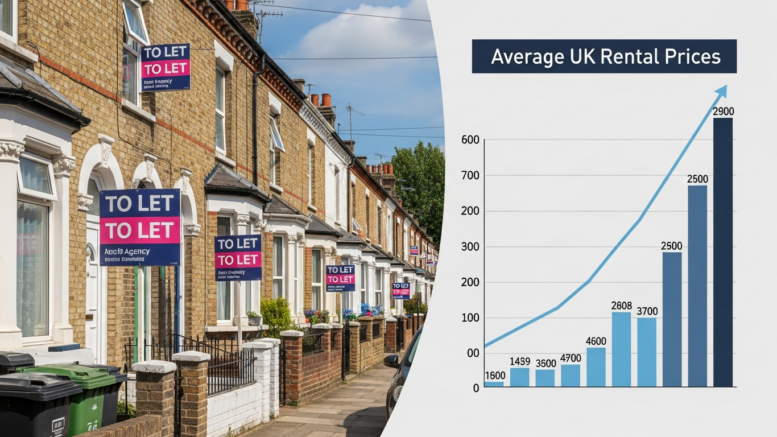
Average rents on new tenancies in England jumped to £1,309 in June, with annual rental inflation rising to 6.5 percent – the highest level since August 2024, according to the latest Goodlord Rental Index.
The shift marks a sharp break from the softer pattern seen earlier this year. Goodlord said annual rental inflation had held at 1.7 percent in both April and May, before June brought a stronger rise in both yearly and monthly prices.
For landlords, the question is whether this is a one-month summer bounce or an early sign that pricing is resetting after the Renters’ Rights Act reshaped the rules around rent increases. Either way, the latest figures suggest new tenancy pricing is moving faster than broader inflation again.
June rents rose faster than inflation and wages
Goodlord said average rents rose by 8.1 percent between May and June, climbing from £1,211 to £1,309. That left annual rent inflation running at more than double the latest 3 percent CPI reading and ahead of 3.4 percent wage growth.
The company said its index is based on confirmed tenancy transactions rather than asking prices, which makes it a closer read on what tenants are actually agreeing to pay. Landlords tracking where achievable rents are heading may see that as a more useful signal than listing-led snapshots.
The strongest annual rise came in Yorkshire and the Humber, where rents were up 16 percent year on year. The South West and North East both posted annual inflation above 10 percent, while London recorded a 5.6 percent yearly increase.
William Reeve, chief executive of Goodlord, said June may offer an early indication of the effect the new legal framework is having on the market. He said one possible explanation was that landlords now have a clearer incentive to set a higher starting rent on a new tenancy because in-tenancy increases are more restricted under Section 13.
Why landlords will watch the Section 13 effect closely
That matters because the new regime limits landlords to one rent increase a year via the statutory Section 13 process. In practice, that can make the opening rent on a fresh tenancy more important than it was before, especially for landlords trying to protect yield against higher costs and tighter regulation.
This follows Landlord Knowledge’s June report on Goodlord’s May index, which showed rental inflation staying at a 10-month low as the market adjusted to the first month of the new rules. June’s figures point to a much quicker rebound than that earlier snapshot suggested.
The underlying Goodlord Rental Index says every region in England recorded both annual and monthly rent growth in June. The South West saw the biggest month-on-month jump at 29.5 percent, while the West Midlands recorded the smallest increase at 0.5 percent.
Landlords should still treat one month of data with caution. Summer lettings activity often pushes rents higher, and Goodlord itself said it was too early to say whether June marks a one-off recalibration or the start of a more persistent shift in pricing.
What this means for landlords
- If you’re reletting this summer: check current achieved rents carefully, because June data suggests some markets have moved faster than spring pricing implied.
- Watch for: whether July and August data confirms that Section 13 limits are feeding into higher opening rents on new tenancies.
- Bottom line: landlords may have slightly stronger pricing power again, but local evidence matters more than a single national headline.
Editor’s view
This is the kind of data landlords need to watch closely over the next two months. If June is confirmed by later readings, the market may be showing a simple reality of the new rules: when in-tenancy increases get tighter, more pricing pressure moves to the start of the tenancy.
Author: Editorial Team – UK landlord & buy-to-let news, policy, and finance
Published: 3 July 2026
Sources: Goodlord Rental Index, ONS consumer price inflation, ONS wage growth data
Related reading: Goodlord: rental inflation stays at 10-month low in May