

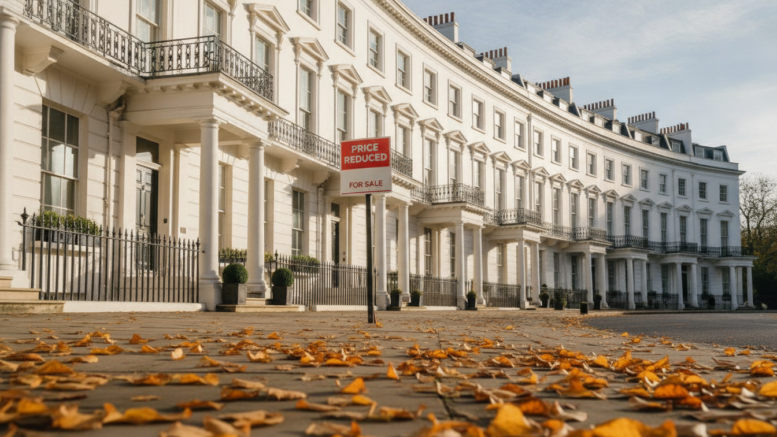
Eight out of ten homes in prime central London now change hands below their asking price after values across the capital’s most expensive postcodes fell 5 percent in the third quarter of 2026, research by private bank Coutts shows.
Sellers accepted an average discount of 10 percent, the bank reports, with some owners taking losses running into hundreds of thousands of pounds. Prices at the top end of the market now sit 14 percent below their 2014 peak.
Owners of high-value London flats now face a buyer-led market on both sides of the ledger. Discounts this wide turn patient cash buyers into price makers, while sellers who must move – whether to refinance, restructure or leave the sector – carry the cost of meeting the market.
Knightsbridge and Belgravia sit 30 percent below peak
The steepest falls landed in the most expensive streets. Knightsbridge and Belgravia now trade 30.8 percent below peak levels, while South Kensington values sit 26.9 percent down from their highest point. Mayfair, Belgravia and Knightsbridge all featured among the postcodes where sellers gave ground fastest.
Coutts attributes the slide to a run of shocks: Brexit, the Covid pandemic, higher property taxes and dearer borrowing costs. Alex Webster, head of lending at Coutts, said buyers and sellers at the top end were taking a more cautious approach, even before this week’s Budget. “Financing conditions and the wider economic environment will continue to influence the market,” she said.
Transactions stall as listings thin out
Activity cooled alongside prices. New listings in prime central London fell 14 percent against the previous quarter, available stock dropped 6 percent year on year and transactions came in 9.1 percent lower. The sharpest slowdown hit the 2 million pound to 5 million pound band, where deals dropped 22.3 percent. Buying and selling agents report weaker interest from foreign-born buyers since the abolition of the non-dom tax regime.
Separate figures from data house LonRes point the same way: achieved sale prices across prime London fell 4.0 percent in the year to the third quarter, with central areas down 2.3 percent, volumes 10.0 percent lower and the average discount to asking price at 10.1 percent. While the Bank of England has held base rate at 3.75 percent, volatility in bond markets has pushed up the swap rates behind fixed-rate mortgage pricing, and markets see a possible rise to 4 percent next week.
Mansion tax adds to prime London pressure
The discount market now meets a tougher tax outlook. The Treasury has confirmed a mansion tax on England homes worth 2 million pounds or more, with annual bills of 2,500 to 7,500 pounds from 2028 – a levy aimed squarely at the postcodes Coutts covers. That prospect helps explain why some owners are accepting discounts now rather than testing the market later.
There is one pocket of defiance. Savills counts 26 deals above 10 million pounds in the third quarter, and 127 over the past year with a combined value of 2.88 billion pounds. The very top tier keeps moving while the market just beneath it stalls, a split that matches rental data showing prime rents holding firm even as sales prices slide. Yields on paper improve as prices fall, but only for buyers who can fund without stretched debt. For background on the dataset behind these figures, see the LonRes prime London market update for autumn 2026.
This follows Landlord Knowledge’s October report on prime rents rebounding as post-reform demand squeezed stock, which found the top end of the rental market holding up while mainstream segments softened. The latest sales figures suggest that split now runs both ways: rents on expensive London homes stay firm while their capital values keep sliding, leaving yields stronger but exits harder.
What this means for landlords
- If you own in prime central postcodes: get a fresh valuation before refinancing or restructuring – 10 percent discounts are now the norm, not the exception.
- If you are buying: sub-5 million pound stock shows the weakest demand, with deals down 22.3 percent, so offers below asking stand a better chance than at any point since 2014.
- Watch for: the confirmed mansion tax from 2028 and any base rate rise to 4 percent, both of which would bear down further on high-value prices.
- Bottom line: rental demand at the top end still holds, so holding and letting beats a forced sale at a discount.
Editor’s view
Prime London is repricing in plain sight, and landlords should read it as a buyer’s market with a tax clock ticking. Sellers who can wait for the ultra-prime froth to spread downwards may wait a long time – those who must sell should price for the market as it is.
Author: Editorial Team – UK landlord & buy-to-let news, policy, and finance
Published: 2 November 2026
Sources: Coutts, LonRes, Savills
Related reading: Treasury confirms £2m mansion tax with £2,500-£7,500 bills from 2028