

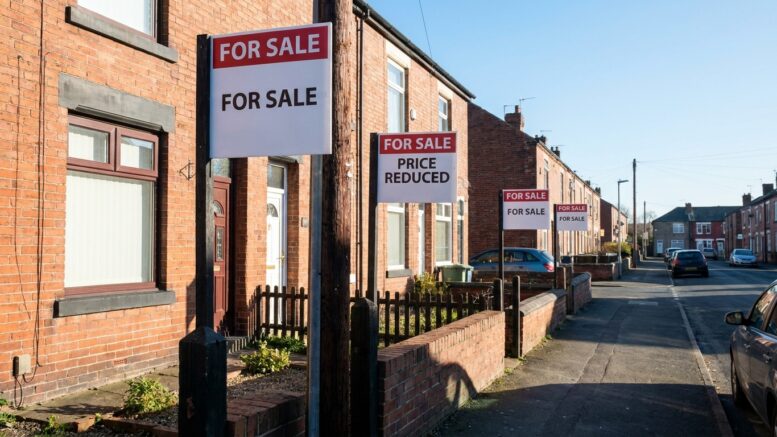
Nationwide reports UK annual house price growth slowed to 0.5 percent in October, the weakest pace since January 2024, with prices unchanged month on month and the average home priced at £273,566.
The building society said growth slipped from 0.8 percent in September after a revised 0.3 percent monthly fall last month. Robert Gardner, chief economist at Nationwide, said market activity had lost pace in recent months against an uncertain economic backdrop.
Flat prices reset the maths for landlords who bought for capital growth rather than rent, as higher borrowing costs now decide whether deals still stack up. With the Autumn Budget out of the way on 28 October and lenders still repricing around rate-rise bets, the next move in mortgage pricing matters more for 2026 buying plans than headline values.
Mortgage costs keep buyers on sidelines
Gardner said geopolitical tension and the conflict in the Middle East had pushed up energy prices and fed inflation concern. That in turn lifted financial market expectations for Bank Rate rises, keeping upward pressure on the market rates behind mortgage pricing.
Forward indicators point to further softness in the near term, the society said. Surveyors report new buyer enquiries remain weak and consumer sentiment dipped noticeably in October, with households less confident about the economy and their own finances in the year ahead.
This follows Landlord Knowledge’s September report on Nationwide data showing growth halving to 0.8 percent, which also flagged thin buyer demand and regional splits. The October update shows that slowdown has deepened rather than levelled off.
Affordability gains only partly unwound
Nationwide said there were still reasons to expect momentum to return once the energy shock fades. Economic growth had proved resilient, employment was holding up, real incomes were rising and household debt stayed close to 20-year lows relative to disposable income.
The society added that the improvement in affordability over the past two years had been only partly unwound by higher market rates, as income growth continued to outpace house price growth by a wide margin. For investors, that mix of flat prices and firmer pay growth is more helpful than it looks, since it supports tenant demand even while it trims paper gains. Zoopla data on family homes moving back within reach of average earners points the same way.
Full figures are in the Nationwide October House Price Index report.
What this means for landlords
- If you are buying in the next six months: flat national prices give more room to negotiate, so price offers on survey findings and time on market rather than last year’s comparables.
- If you already own: expect little near-term equity uplift to flatter loan to value ratios, so test remortgage plans at current pricing rather than hoped-for value gains.
- Watch for: swap-rate moves and lender repricing after the Budget, which will feed through to fixed-rate buy-to-let deals faster than house price data.
- Yields matter more: with growth at 0.5 percent, cash flow and voids decide returns, so focus on rent cover and tenant demand by area.
- Bottom line: a flat market rewards selective buying and steady management over bets on quick price rises.
Editor’s view
A weak headline can be useful for landlords with cash and patience. Less competition from owner-occupiers means keener vendors, while steady employment supports rents. The risk is overpaying for growth that is not there.
Author: Editorial Team – UK landlord & buy-to-let news, policy, and finance
Published: 30 October 2026
Sources: Nationwide, Bank of England
Related reading: Nationwide: UK house price growth halves to 0.8%