

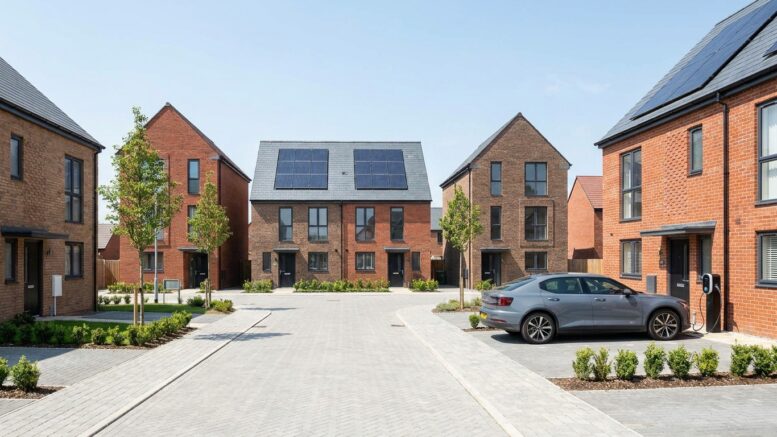
Lloyds Living has agreed to take 182 new private rental homes across three Keepmoat developments in Gedling, Leicester and Gainsborough, adding apartments and family houses to its regional build-to-rent pipeline.
The agreement covers 69 homes in Gedling, 53 at Frog Island in Leicester and 60 at Warren Wood in Gainsborough. The homes include 119 houses and 53 apartments, with solar panels and electric-vehicle charging included at selected sites.
The deal is a fresh sign that large institutional operators are still adding stock in regional rental markets, even as many smaller landlords weigh borrowing costs, compliance demands and slower investment decisions. More professionally managed new homes can change the local competition for tenants, particularly in the family-house segment.
Build-to-rent deal adds family rental homes
Keepmoat will deliver 30 two-bedroom houses, 77 three-bedroom houses and 22 four-bedroom houses, alongside 11 one-bedroom and 42 two-bedroom apartments. That mix matters because it is aimed at renters who need more space, not solely at city-centre apartment demand.
Landlord Knowledge recently covered Savills data showing build-to-rent starts had fallen sharply. A signed delivery agreement does not reverse the national pipeline problem, but it shows capital is still finding selected regional schemes that can be taken forward.
The agreement also shows why headline BTR capacity figures need local interpretation. A new family house has a different tenant pool from a central flat, and the three sites will not affect every local landlord equally. The sharper question is whether an incoming home is close enough in size, condition and rent to give a tenant a credible alternative.
For existing owners, that makes basic market monitoring more useful than broad claims about institutional competition. Comparing advertised rents, energy performance, availability and tenant incentives around each development can reveal whether a change to a re-let strategy is actually needed.
Competition will be local, not national
This follows Landlord Knowledge’s report on Lloyds Living’s Midlands rental expansion, which showed why individual delivery deals have become more important to local supply. The new deal gives landlords in the three affected markets a clearer reason to compare their own homes, rent levels and management offer with incoming stock.
The official Lloyds Living developments portfolio shows its focus on rental homes in regional locations. Existing landlords will not be competing with all 182 properties at once, but the arrival of modern, energy-efficient houses can make condition, response times and fair pricing more important at tenancy renewal.
The wider supply benefit should not be overlooked. More rental homes may give households more choice in markets where suitable family accommodation is limited. For landlords, however, the commercial lesson is straightforward: a well-maintained home with clear running-cost information is easier to defend against a new-build alternative.
What this means for landlords
- If you own near Gedling, Leicester or Gainsborough: track the delivery dates and asking rents for the new schemes before setting renewal or re-let prices.
- Watch for: tenant expectations on energy bills, charging provision and property condition as the new homes enter the market.
- Bottom line: institutional build-to-rent is expanding selectively, so local property quality and management will decide the competitive effect.
Editor’s view
The significance is not the headline total alone. A portfolio of new family homes can reset expectations in a small number of local rental markets, where private landlords compete property by property.
Author: Editorial Team – UK landlord & buy-to-let news, policy, and finance
Published: 17 September 2026
Sources: Lloyds Living, Keepmoat
Related reading: Savills: BTR starts plunge 79% as pipeline keeps shrinking