

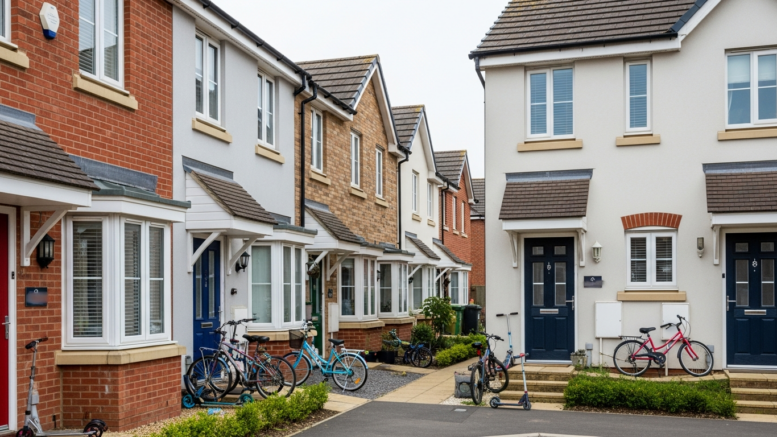
Children are now more likely than working-age adults to live in the private rented sector, with 3.2 million children in privately rented homes and 23 percent of children now renting compared with 22 percent of working-age adults, according to new Resolution Foundation research.
The new figures, published in the think tank’s latest housing outlook, show how far the sector has shifted since 2000-01. Britain now has 12.9 million people living in 5.1 million privately rented households, up from 5.1 million people in 2.5 million households at the turn of the century, while more than a quarter of under-1s now live in rented homes.
For landlords, the immediate point is that private renting is no longer dominated by younger, shorter-stay tenants. As more families raise children in rented homes for longer, pressure will grow around property standards, stability, affordability and the practical impact of the Renters’ Rights Act.
Private renting is shifting into the family years
Resolution Foundation said renters in their 20s remain the age group most likely to rent privately, at 37 percent, but the sharpest rise has come among people in their 30s. The share of thirtysomethings in the sector has climbed from 10 percent in 2000-01 to 28 percent in 2024-25.
That matters because it changes what many tenants need from landlords. A market once seen as a short stop before ownership is increasingly housing households with children, longer school ties and less room for churn. The report also said the average time private renters stay in the same home has risen from 3.7 years in 2010-11 to 4.7 years in 2024-25.
Hannah Aldridge, senior research and policy analyst at the Resolution Foundation, said: “For a growing number of people, the private rented sector is less a pitstop on the way to home ownership or a social tenancy, and more a permanent home.”
The Foundation also set out the quality gap behind that shift. One in 10 private rented homes in England have damp, compared with four percent of mortgaged homes, while less than half are energy efficient. It said one in six private renters do not feel secure enough in their housing to make long-term decisions.
This follows Landlord Knowledge’s report on older renters spending 48 percent of income on rent, which highlighted how affordability pressure is no longer confined to younger households. Combined with recent RICS data showing tenant demand still rising as landlord supply falls, the latest figures point to a sector carrying more long-term family demand without a clear increase in suitable stock.
Local Housing Allowance freeze keeps the pressure on
The report backs the Renters’ Rights Act as a step forward on security and standards, but says it will do little to solve the cost side of renting. Private renters spend an average of 35 percent of income on housing costs, above the 30 percent level often used as an affordability benchmark.
Resolution Foundation warned the gap between Local Housing Allowance support and actual rents is set to hit a record level later this year because LHA has been frozen since April 2024. For landlords, that keeps arrears risk and affordability strain in play even where regulation improves tenant security.
There is also a sharper policy issue for investors weighing upgrades. The report notes that 2.3 million private rented homes in England do not yet meet the EPC C level expected by 2030, with a typical improvement cost of about £9,000. That leaves landlords balancing future compliance spending against a tenant base that is becoming more family-led and less able to absorb higher rents.
Landlords looking at family homes may take some comfort from longer stays and steadier demand. But the trade-off is likely to be closer scrutiny on repairs, energy performance and rent setting as politicians focus more heavily on the lived reality of family renting. The full Housing Outlook Q2 2026 report makes clear that the sector’s demographic change is now feeding directly into the policy debate.
What this means for landlords
- If you let family-sized homes: Expect more focus on damp, energy efficiency and stability, because more tenants are staying put through key family stages.
- Watch for: Further pressure on Local Housing Allowance rates and affordability policy if rent shortfalls widen later this year.
- Bottom line: The private rented sector is housing more long-term families, so standards and affordability risks now matter as much as raw demand.
Editor’s view
Landlords have spent years hearing that private renting is a flexible tenure for younger adults. That description is now badly out of date. If the sector is housing millions of children, policy and landlord decision-making will keep moving away from short-stay assumptions and toward the standards expected of a long-term home.
Author: Editorial Team – UK landlord & buy-to-let news, policy, and finance
Published: 27 May 2026
Sources: Resolution Foundation, Housing Outlook Q2 2026
Related reading: Older renters spend 48% of income on rent, charity warns