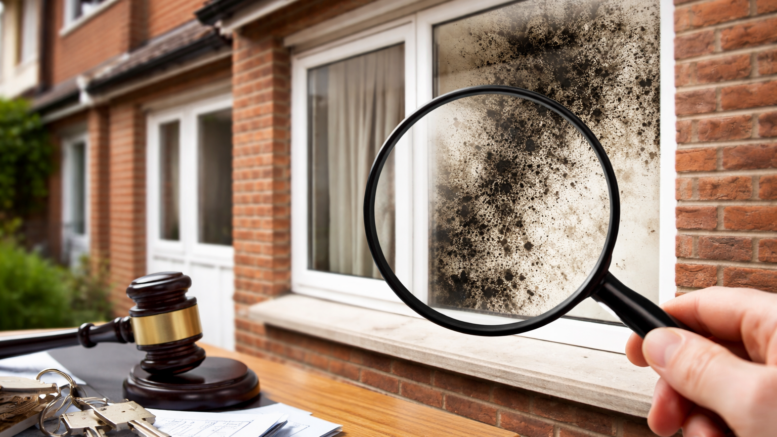
Private landlords will soon face new statutory deadlines to repair damp and mould after the government confirmed that Awaab’s Law will extend to the private rented sector (PRS). The changes, delivered through the Renters’ Rights Act 2025, mean tenants will be able to challenge landlords in court and claim compensation if the required timeframes are not met.
Implementation is expected during phase three of the Act in 2027, giving landlords limited time to prepare for stricter compliance demands that mirror – but may not fully replicate – those already applied to social housing providers.
What Awaab’s Law means for UK landlords
📘 Renters’ Rights Act: Complete Landlord Guide
Everything you need to know about the new rules – 1 May 2026
Under published guidance, Awaab’s Law will be written directly into all private tenancy agreements. Once regulations set out the specific timeframes, landlords will have legal obligations to assess and remedy hazards promptly. For context, in social housing:
- Emergency hazards must be addressed within 24 hours
- Potential significant hazards must be investigated within 10 working days
- Alternative accommodation must be funded if a property cannot be made safe in time
The government stresses these rules will not be copied wholesale into the PRS without consultation, noting “differences between the private and social rented sectors”. Nonetheless, the direction of travel is clear: faster responses, improved record-keeping, and more robust evidence of maintenance.
If landlords fail to comply, tenants can pursue breach of contract claims in court. Judges may order repairs, award compensation, or both. The new Private Rented Sector Landlord Ombudsman will also offer an alternative escalation route for unresolved complaints.
For landlords already grappling with rising costs, tightening repair deadlines arrive alongside broader enforcement powers. Under the Renters’ Rights Act, breaches can trigger:
- Fines up to £40,000
- Rent repayment orders lasting up to 24 months
- Enhanced local authority inspection activity
These obligations come at a time of strong rental demand. In several regions, including the North West and Midlands, landlords report ongoing pressure on stock and rising tenant expectations around property condition.
New compliance tools and specialist support for landlords
With reparative responsibilities increasing, attention is turning to technologies that help landlords stay compliant. Suffolk-based firm Qualisync Ltd has launched AskLettie, an AI-powered WhatsApp triage tool designed to automatically log repair requests, walk tenants through simple fixes, and escalate genuine hazards to landlords within minutes.
These systems could become essential as landlords face higher risk exposure. Many letting agents already report tenants becoming more assertive about their rights, particularly in relation to damp and mould after several high-profile cases.
The government insists it will apply Awaab’s Law to the PRS “fairly, proportionately and effectively”, acknowledging the sector’s more fragmented nature and the financial constraints many small landlords face. A consultation will outline proposed timeframes and enforcement models before the 2027 implementation.
Still, landlords should anticipate more prescriptive rules around response tracking, digital evidence, and consistent communication – all of which are likely to form part of the statutory expectations placed on property owners.
Editor’s view
Awaab’s Law marks a decisive shift in the PRS landscape. While landlords broadly agree on the need for safe, well-maintained homes, the concern lies in rigid deadlines that may not reflect real-world access issues, contractor shortages or multi-property management pressures. Practical consultation will be vital if the law is to protect tenants without driving responsible landlords out of the sector.
Author: Editorial team – UK landlord & buy-to-let news, policy, and finance
Published: 19 December 2025
Sources: Renters’ Rights Act guidance; DLUHC statements; Qualisync Ltd; sector analysis
Related reading: New repair reporting tool aims to help landlords comply with Renters’ Rights Act