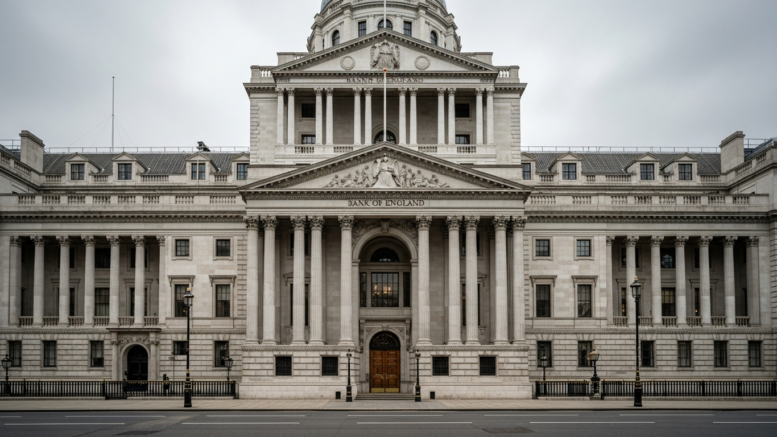
The Bank of England has kept interest rates at 3.75 percent following its March Monetary Policy Committee meeting, dashing hopes of a spring rate cut as geopolitical tensions continue to unsettle financial markets.
The decision was unanimous, with all nine MPC members voting to hold amid heightened uncertainty around the ongoing conflict in Iran. Before the Middle East crisis, analysts had widely expected a cut after inflation dropped to 3 percent in January. The base rate now sits at its lowest level since February 2023, but economists are less certain about the timing of any further reductions.
Market volatility hitting mortgage pricing
The hold comes as lenders pull mortgage products and reprice upwards following a spike in swap rates. While the base rate remains unchanged, the underlying costs lenders use to price fixed-rate mortgages have risen, feeding through to higher rates for landlords seeking to remortgage or expand portfolios.
This follows Landlord Knowledge’s earlier reporting on how the Iran conflict halted BTL rate cuts, with swap rate increases forcing lenders to pause or reverse planned reductions. Today’s decision suggests that pattern will continue for the time being.
Matt Smith, mortgage commentator at Rightmove, said recent geopolitical uncertainty has made financial markets more volatile. “That volatility feeds into swap rates, which are the underlying costs lenders use to price fixed-rate mortgages. As a result, some mortgage rates have nudged up slightly this week, even though the Bank Rate itself has not changed,” he said.
Smith added that while the average monthly mortgage payment on a new purchase has increased by around £45 so far, it remains around £70 lower than it would have been at this time last year.
Industry urges landlords to stay the course
Nathan Emerson, chief executive of Propertymark, said the decision provides stability for the property market. “Mortgage repayments remain predictable, which is critical for households balancing cost-of-living pressures,” he said. “For sellers and landlords, this environment allows for measured planning, while buyers can explore financing options without the immediate concern of rising borrowing costs.”
Kevin Shaw, national sales managing director at LRG, said the housing market has shown resilience despite the conflict. “We are not seeing the conflict translate into any meaningful slowdown in agreed sales or new listings, and our application levels from would-be buyers are up 9 percent on 2025,” he said.
Shaw added that with six MPC meetings still to come this year, there remains every chance of rates easing later in 2026. “A move on 30 April would be warmly received,” he said.
Ben Thompson, director of home moving strategy at Mortgage Advice Bureau, said few will be surprised by the hold. “With energy price pressures and ongoing geopolitical tensions creating uncertainty, the bank will want clearer evidence that inflation is moving sustainably back towards its 2 percent target before making any further moves,” he said.
Thompson added that external pressures could mean cuts take longer to arrive than many had hoped. “For homebuyers and current homeowners, the key message is not to panic. Focus on understanding your options rather than rushing into decisions.”
Daniel Austin, chief executive and co-founder of ASK Partners, said the decision reinforces the “higher for longer” reality facing property markets. “While policymakers continue to signal potential cuts later this year, the recent uptick in inflation and renewed geopolitical tensions in the Middle East underline just how uncertain the path back to target remains,” he said.
Austin warned that any escalation pushing up energy prices could complicate the disinflation story. “Mortgage pricing has improved and further easing would be welcome, but it will take time for meaningful relief to filter through to household finances and borrowing costs.”
Oliver Prior, managing director of Auction House, warned that rates could move higher rather than lower if the conflict persists. “We are likely to see an increase of interest rates as a consequence of the climbing price of oil due to the challenges around shipping via the Strait of Hormuz,” he said.
Full details of the MPC decision are available on the Bank of England monetary policy page.
What this means for landlords
- If you are remortgaging soon: Lock in rates now rather than waiting – further volatility is possible if the conflict escalates, and products are being withdrawn at short notice.
- Watch for: The next MPC meeting on 30 April – a rate cut remains possible if geopolitical tensions ease and inflation continues to fall.
- Bottom line: The base rate is unchanged, but market volatility means buy-to-let mortgage pricing can still move – landlords should act on good deals when they appear.
Editor’s view
A rate hold was expected, but the risk of increases rather than cuts is new. Landlords who delayed refinancing hoping for cheaper borrowing should reassess – the window for locked-in rates may be narrowing, not widening. With oil prices climbing and inflation pressures building, the next few MPC meetings could disappoint those banking on cuts.
Author: Editorial Team – UK landlord & buy-to-let news, policy, and finance
Published: 19 March 2026
Sources: Bank of England, Rightmove, Propertymark, LRG, Mortgage Advice Bureau, ASK Partners
Related reading: BTL rate cuts on hold as Middle East conflict spikes swap rates