

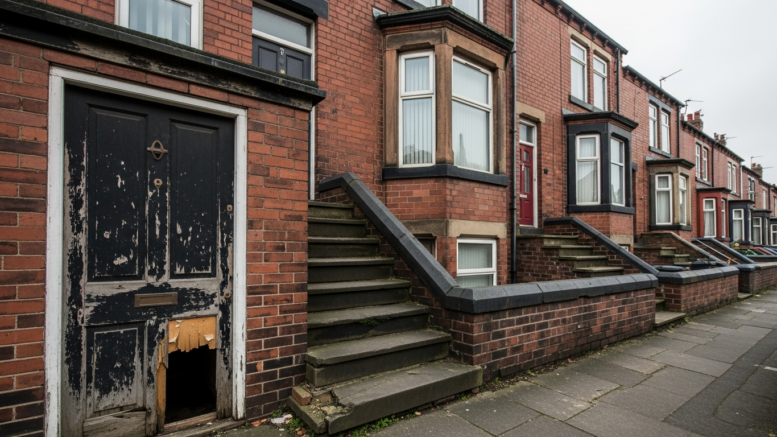
A Leeds landlord has been hit with a higher financial penalty after appealing council enforcement action over safety and management failings at a Harehills rental property, in a case that underlines how quickly poor compliance can become more expensive.
The First-tier Tribunal increased the penalty against Mohammed Gulzar from £7,500 to £10,500 after reviewing conditions at 49 Bayswater Place, where inspectors found multiple hazards and disrepair issues. Leeds City Council had originally proposed a £14,250 penalty, then reduced it to £7,500 after taking mitigating factors into account. The appeal led to a full rehearing – and a bigger bill.
Leeds tribunal said harm was worse than first assessed
The tribunal found the offences created a high risk of serious adverse effect on an individual. Among the problems cited were a bypassed gas meter, defective fire alarms, weak fire protection in a property with only one means of escape, broken windows, damaged plaster, unsafe flooring, missing stair rails and a basement door described as rotten and insecure.
That matters for landlords because the case was not decided on one technical slip. It was the combined picture of safety failures, disrepair and weak management that pushed the penalty higher. Councils are increasingly willing to build enforcement cases around that broader pattern rather than one isolated breach.
Landlords looking at wider enforcement risk can already see the direction of travel in Landlord Knowledge’s coverage of tougher sentencing expectations for housing offences and in this separate example of a licensing dispute reaching the First-tier Tribunal.
Managing agent defence did not shield landlord from financial penalty
Gulzar argued that he had relied on a managing agent, while also pointing to serious health issues and caring responsibilities. The tribunal accepted some mitigation, but it still concluded that the licence holder remained responsible for compliance at the property.
For landlords, that is one of the clearest warnings in the case. Outsourcing management can reduce day-to-day workload, but it does not transfer legal responsibility. If inspections are missed, repairs stall or safety failures build up, the landlord remains exposed when the council or tribunal looks at who was in control.
This follows Landlord Knowledge’s report on Propertymark’s call for fairer sentencing in landlord offence cases, which showed how enforcement is moving toward clearer tests around harm, culpability and documentation. The Leeds ruling adds a blunt practical lesson: an appeal is not just a chance to shave down a penalty – it can also reopen the facts and produce a worse outcome.
Leeds City Council’s own civil penalties policy makes clear that penalties are intended to punish, deter future offending and remove any financial gain from non-compliance. In that setting, weak records and delayed repairs leave little room for a soft landing.
What this means for landlords
- If you use a managing agent: check inspection records, repair logs and safety certificates instead of assuming problems are being handled.
- Watch for: councils building cases around a collection of defects rather than one headline breach.
- Bottom line: appealing a housing penalty without strong evidence can make a bad compliance case more expensive.
Editor’s view
Some landlords still treat tribunal appeals as a low-risk second chance. This case suggests otherwise. If the paperwork is weak and the defects are serious, a rehearing may simply give the tribunal more room to punish the failure.
Author: Editorial Team – UK landlord & buy-to-let news, policy, and finance
Published: 7 May 2026
Sources: First-tier Tribunal decision on 49 Bayswater Place, Leeds City Council civil penalties policy
Related reading: Propertymark seeks fairer sentencing for landlord offences