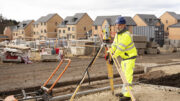


Residential construction starts fell 30 percent year-on-year in the three months to the end of March, according to the latest Glenigan Index, adding to concerns that the pipeline of new homes is weakening at the same time landlords face rising borrowing costs and tighter regulation.
The data shows overall construction starts were down 18 percent against the same period in 2025 and 17 percent lower than the previous quarter. Within that, residential activity had one of the sharpest declines, with private housing starts down 34 percent year-on-year and social housing starts down 16 percent.
Residential development slows across the market
For landlords, the residential figures matter more than the headline drop in total construction. Fewer homes starting on site today usually means less completed stock coming through later, which can keep pressure on rents and limit choice for tenants.
Glenigan said private housing starts dropped 9 percent against the previous three months, while social housing starts fell by roughly a quarter over the same period. That points to weakness across both market-led and publicly backed development, rather than a problem confined to one corner of the sector.
Allan Wilen, economics director at Glenigan, said a seasonal rise in the first quarter was masking a broader slowdown. “All three main verticals: housing, non-residential buildings and civil engineering are considerably lower than a year ago and on the previous quarter on a seasonally adjusted basis,” he said.
He added that geopolitical tension and a weak domestic economy were causing developers and buyers to delay decisions, with higher material, energy and finance costs feeding into that caution.
Why the slowdown matters for landlords
Landlords do not rely on new-build supply in the same way as owner-occupiers or large housebuilders, but a thinner pipeline still affects the rental market. When fewer homes are built, existing stock carries more of the burden, especially in areas where demand is already outstripping supply.
This follows Landlord Knowledge’s recent report on rising landlord mortgage costs, which showed how higher finance bills are already squeezing margins. If construction activity stays weak, landlords could face a market where acquisition opportunities remain limited while pressure on tenants’ budgets stays intense.
There is also a wider policy issue. The government wants to increase housing delivery, but the latest figures suggest the development side of the market is moving the other way. That sits alongside Landlord Knowledge’s coverage of the building safety skills shortage, which highlighted another bottleneck in getting schemes approved and delivered.
The latest Glenigan Index of construction starts to end of March 2026 suggests the problem is not just planning delay or one-off disruption. London was a clear regional exception, but much of the rest of the UK saw weaker performance, with the South West, West Midlands and South East all posting steep quarterly and annual falls.
Housing targets look harder to meet
The soft residential numbers raise a practical question for landlords and investors: where will additional housing supply come from if both private and social starts are sliding? In the short term, the answer may be that it does not arrive quickly enough. That can support rents in undersupplied areas, but it also raises the risk of more political pressure for intervention if affordability worsens further.
There is a note of caution for investors too. A weaker construction market does not automatically translate into a better market for landlords. If the slowdown reflects nervous developers, expensive finance and buyers stepping back, those same conditions can hold back buy-to-let expansion and refinancing.
For property investors, the signal from Glenigan is less about one bad quarter and more about a market losing momentum at a difficult point in the cycle. Housing shortages may keep tenant demand firm, but the cost of adding new supply remains high and confidence in the development pipeline is fading.
What this means for landlords
- If you’re buying: A weaker development pipeline may keep local supply tight, particularly in areas already short of rental stock.
- If you’re refinancing: Do not assume supply shortages will offset higher borrowing costs – deal pricing still matters more to short-term returns.
- Watch for: Whether private housing starts remain weak into Q2, which would increase pressure on delivery targets for 2026.
- Bottom line: Fewer homes starting on site is good for neither tenants nor long-term market health, but it may keep rental competition elevated in the near term.
Editor’s view
Landlords should not read falling construction starts as an easy win. Tight supply can support rents, but it also feeds the affordability problems that drive heavier regulation and political pressure. A healthier market needs more homes, not just more competition for the ones already standing.
Author: Editorial Team – UK landlord & buy-to-let news, policy, and finance
Published: 8 April 2026
Sources: Glenigan
Related reading: Government pledges £70m to fix building safety skills shortage