

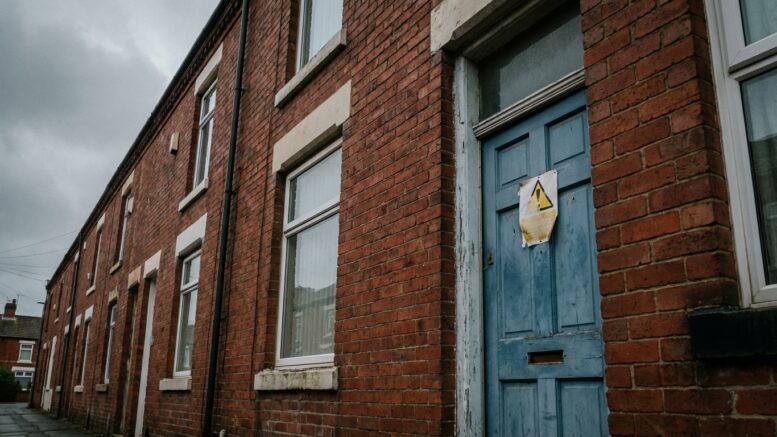
Around 726,000 privately rented homes in England could fail the Decent Homes Standard by the 2035 deadline, according to new analysis – as an independent watchdog slammed the government’s impact assessment as “not fit for purpose”.
Research from property technology firm Inventory Base, based on the English Housing Survey, warns that progress in improving housing standards is not keeping pace with requirements. The firm estimates a further 87,000 social housing properties could also miss the deadline.
The warning comes as the Regulatory Policy Committee (RPC) issued a withering verdict on the Ministry of Housing, Communities and Local Government’s proposals for extending the standard to private landlords.
Watchdog orders rethink
The RPC ruled that the impact assessment jumps straight to a single preferred option without properly weighing alternatives.
“In the absence of structured comparison, the IA cannot demonstrate that the preferred option outperforms alternatives for cost-effectiveness, compliance, risks or sequencing,” the committee stated.
The watchdog has ordered the department to produce a full shortlist appraisal in line with Treasury Green Book rules before proceeding.
82% of costs already covered by existing law
There are also major issues with the £6.5 billion price tag for implementing the standard across both private and social housing sectors.
Crucially, 82 percent of the costs to private landlords are not additional because they are already driven by pre-existing legislation such as the Homes (Fitness for Human Habitation) Act 2018, the Housing Health and Safety Rating System, and tighter EPC standards.
The committee criticised the government for not applying the same logic to claimed benefits – presenting tenant gains as if they are all brand new, while acknowledging that most landlord costs are not.
Around 48 percent of PRS homes are expected to fail the new standard, mostly due to disrepair but also tighter rules on thermal comfort, damp and mould, and facilities.
Progress stalling
The Inventory Base analysis shows that the number of non-decent homes in the private rented sector has fallen from 1.45 million in 2008 to 1.09 million in 2024, an average annual reduction of 1.6 percent. However, 2024 saw a 6.1 percent uptick in non-decent properties, reversing the downward trend.
Social housing has made faster progress, with non-decent homes falling from 1.07 million in 2008 to 428,000 in 2024 – an average annual reduction of 2.7 percent. But the private sector, with its larger stock and fragmented ownership, faces a steeper challenge.
The findings come weeks after government modelling suggested private landlords face a collective £26.5 billion bill to bring properties up to the new standard.
Industry reaction
Emily Popple, Director of Landlord Experience at Goodlord, said: “This will be disappointing news for the government at a time when it’s overseeing the most seismic set of PRS reforms in a generation. You’d be hard pushed to find reputable landlords and agents in the PRS who don’t support higher housing standards. But any new regulations must have a robust and economically sound policy base underpinning them.
“This week’s report undermines the government’s position and will make it harder to garner goodwill amongst an industry who are already grappling with a wide range of new costs and regulations. The government must address these concerns properly, otherwise it risks raising wider questions about regulatory oversight and cost-benefit discipline at a time when tensions in the markets are already high.”
Sian Hemming-Metcalfe, operations director at Inventory Base, said nine years is a long time to tell tenants to wait for homes to become properly fit for habitation.
“A fixed 2035 deadline is at least a step forward, if only because it replaces vague ambition with something more concrete,” she said. “But the uncomfortable truth is that we are not moving fast enough.”
She warned that the real risk is not failing to meet the new benchmark, but failing to meet existing standards. “Hundreds of thousands of homes already fail today’s Decent Homes Standard. By 2035, the risk is not that we fall short of the new benchmark – it’s that we still have not met the old one.”
Government pressing ahead
Despite the RPC’s verdict, the government is still expected to push ahead using secondary legislation powers in the Renters’ Rights Act. The Decent Homes Standard introduces new enforcement powers for local authorities and tightens obligations on landlords. Properties failing the standard could face enforcement action, with councils able to issue improvement notices and pursue civil penalties.
For landlords, the combined data highlights the scale of investment required to maintain compliant portfolios over the next decade – and raises questions about whether the policy underpinning it has been properly assessed.
Editor’s view
The RPC verdict is damaging for a government already facing pushback from landlords over reform costs. When the watchdog says 82 percent of compliance costs are already covered by existing law, it raises a fair question: what exactly is this new standard adding beyond paperwork? Landlords deserve clarity on what they are paying for – and tenants deserve confidence that the policy will actually deliver better homes.
Author: Editorial Team – UK landlord & buy-to-let news, policy, and finance
Published: 20 February 2026
Sources: Inventory Base, Regulatory Policy Committee, Goodlord
Related reading: Private landlords face £26.5bn bill to meet new Decent Homes Standard